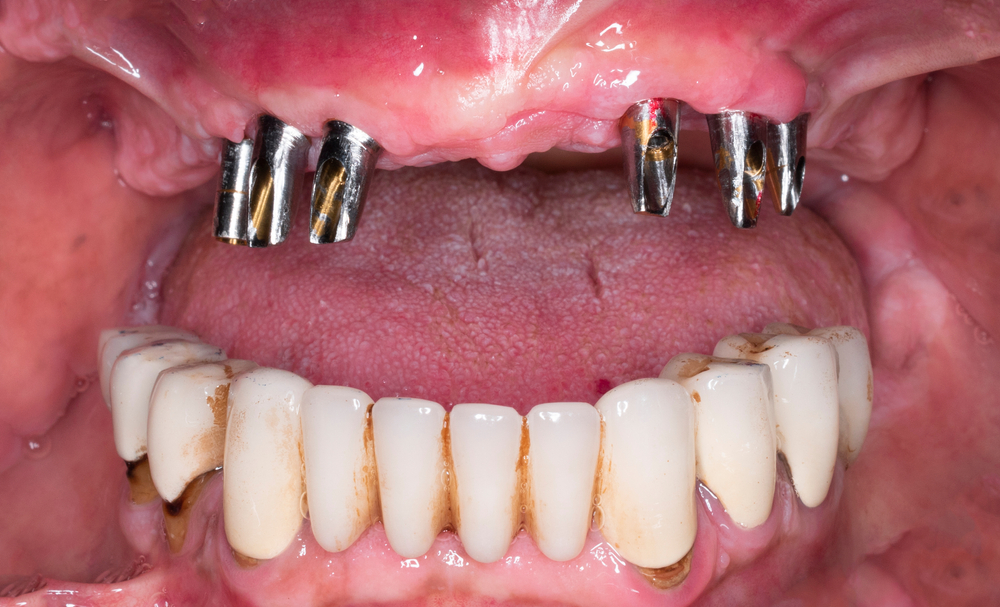
Full mouth reconstruction recovery happens in stages, not as one continuous process.
The first few days feel the most intense, while the deeper healing that makes results permanent continues quietly for months afterward.
The direct answer: expect noticeable swelling, soreness, and a liquid or soft food diet for the first several days following your full mouth reconstruction.
Then noticeable improvements over the following weeks, while the underlying bone and implant integration continues healing for several months in the background.
What the First Few Days of Full Mouth Reconstruction Actually Feel Like
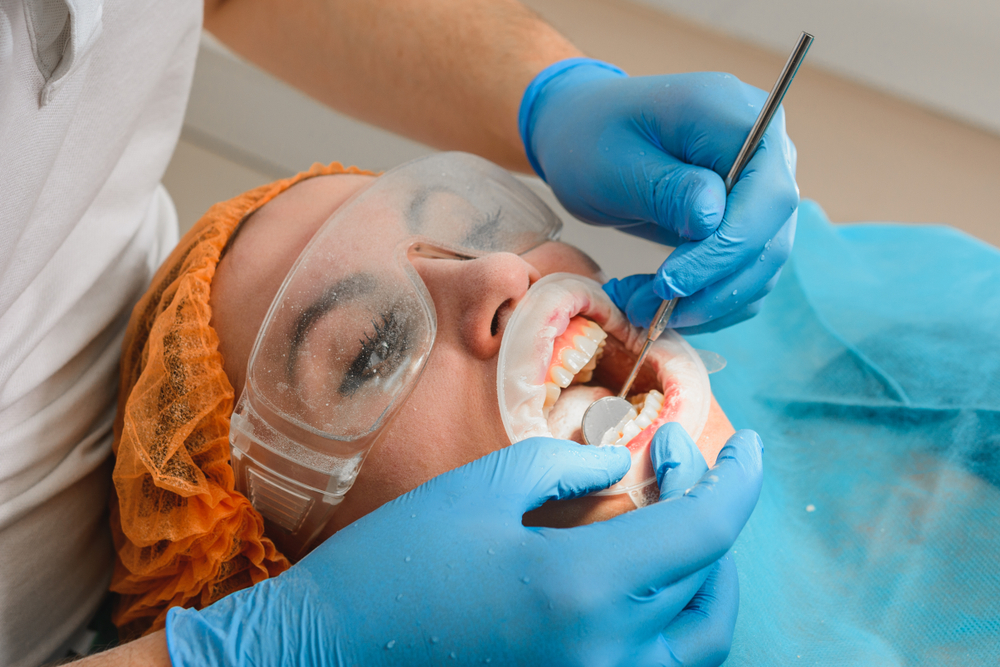
Swelling, mild bruising, and soreness are common in the first several days after surgery. These symptoms typically peak around day two or three, then steadily improve from there.
Pain is usually managed with prescribed medication and generally decreases noticeably within the first week.
Most patients stick to soft or liquid foods during this period, since chewing puts pressure on healing tissue.
Why Full Mouth Reconstruction Involves More Than One Healing Phase
Full mouth reconstruction is typically completed in phases, with healing time built in between each step. Soft tissue around the gums usually heals within a few weeks, but that is only the visible part of recovery.
The deeper process, bone fusing around each implant, takes considerably longer. This phase, called osseointegration, generally follows a set protocol of three to four months in the lower jaw and closer to six to eight months in the upper jaw, since upper jaw bone tends to be less dense.
If bone grafting is needed before implants can be placed, that adds its own healing window, typically another three to six months, before the rest of the reconstruction can move forward.
Recovery also varies depending on which arch is being treated. Lower jaw implants generally heal faster than upper jaw implants, since the bone tends to be denser and supports faster integration in that area.
What Slows Down or Speeds Up Recovery
The number of procedures involved has the biggest impact on total recovery time. A case involving extractions, bone grafting, and implants naturally takes longer than one requiring only crowns or bridges.
Following post-operative instructions closely, avoiding smoking, and attending follow-up visits all support faster, more predictable healing.
Smoking in particular is known to slow bone healing and increase the risk of implant complications, since smoking restricts blood flow and impairs the body’s ability to repair tissue. Which is why most providers recommend quitting well before treatment begins if possible.
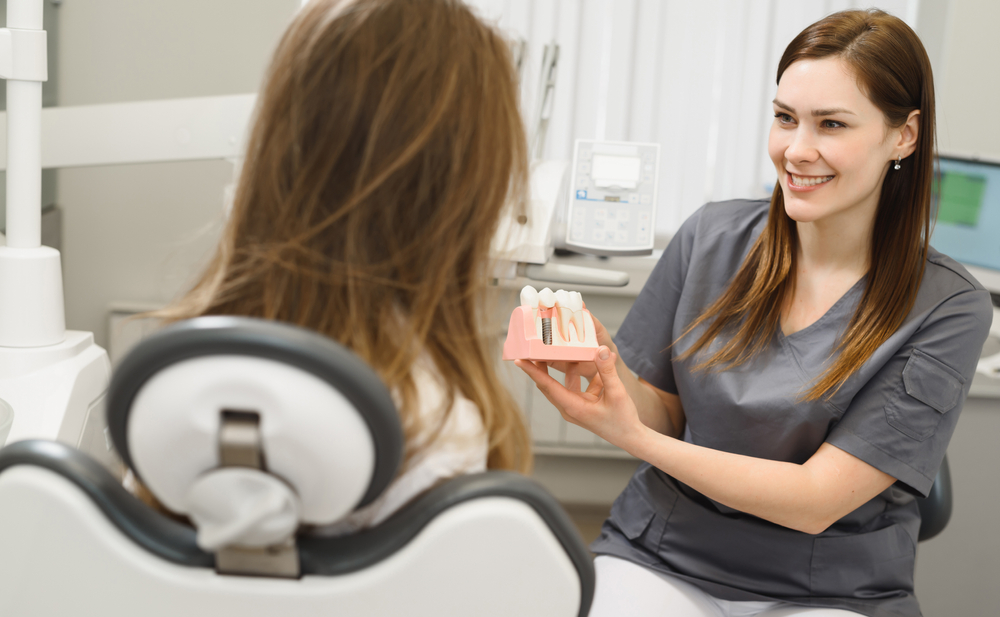
Our expert providers walk patients through what to expect at each phase, since healing time between stages needs to be checked before moving forward.
What Full Recovery From Full Mouth Reconstruction Feels Like
Once healing is complete, most patients describe eating comfortably again as the biggest change, particularly foods they had avoided for years.
Speech often improves as well, since missing or damaged teeth can affect pronunciation in ways people do not always notice until it is corrected.
The entire process, from first procedure to final results, can take anywhere from several months to over a year depending on how many procedures are involved.
Managing Discomfort and Diet During Recovery
Over-the-counter pain relievers are often enough after the first few days, though prescription medication may be used initially depending on the extent of the procedures.
Cold compresses applied to the outside of the face during the first 48 hours help control swelling more than most patients expect.
Diet typically progresses in stages: liquids and very soft foods for the first several days, then gradually introducing foods that require more chewing as healing allows.
Talk to Dr. Joseph Luke About Full Mouth Reconstruction, Call Us Today
At Southern Maryland Family and Prosthodontic Dentistry, Dr. Joesph Luke and his son Dr. Jonathan Luke have been providing patients in St. Mary’s County and Calvert County with full mouth reconstruction since the mid-1990s.
Call us now at 301-880-4439 to request an appointment online.
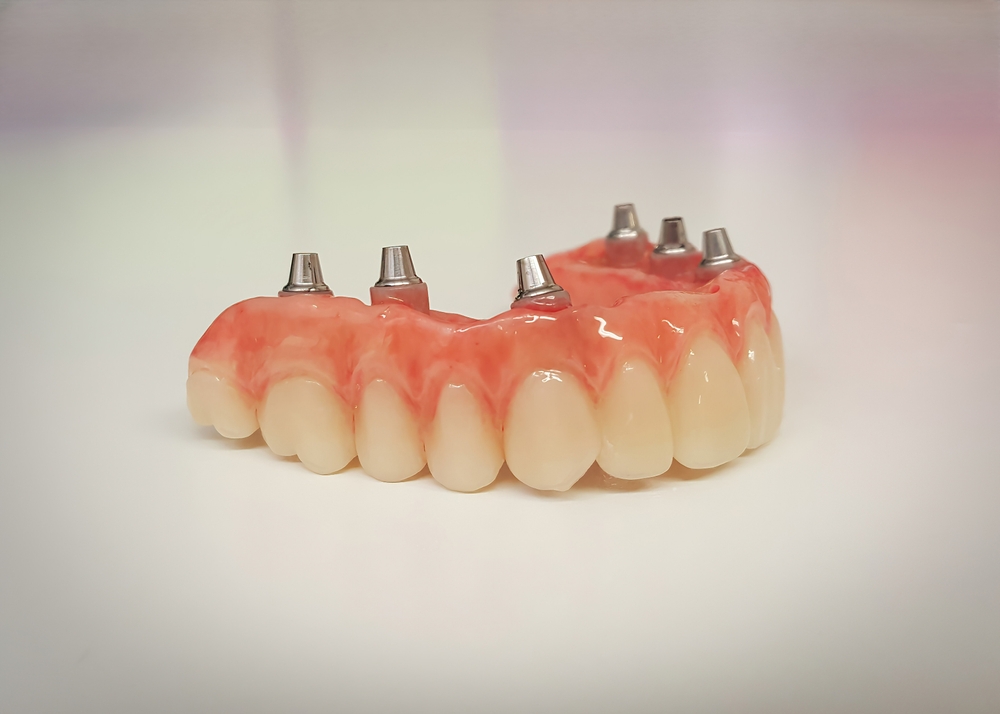
Full arch implant procedures give patients missing most or all of the teeth in one arch a permanent option. Choosing between All-on-4 or All-on-6 usually comes down to available bone and long-term goals rather than personal preference.
Both use titanium implants to support a full arch of teeth with a fixed prosthesis. The number in each name reflects how many implants anchor the arch.
How All-on-4 or All-on-6 Actually Differ
All-on-4 places two front implants straight down to maximize use of available bone, with two back implants angled to avoid the sinus and nerve structures.
This configuration works well even with limited bone volume, often avoiding the extensive grafting other approaches require.
All-on-6 adds two more implants, generally spaced further apart across the arch. These extra implants act as a safety net, distributing chewing force over a larger area and providing backup if one implant does not fully integrate.
Why All-on-6 Requires More Detailed Imaging
Because the implants sit further apart in an All-on-6 case, planning requires more detailed imaging of nerves, sinuses, and bone density to place each one accurately.
A CT scan is standard for both procedures, but the spacing planning for All-on-6 tends to be more involved, since each implant needs enough distance from the others.
This ensures the bite force distributes evenly across the arch without interfering with adjacent implant sites.
Why Implant Count Actually Matters Long Term
A widely known principle sums up the tradeoff: All-on-4, but none-on-3. If one implant fails in a four-implant arch, the remaining three generally cannot safely support a fixed prosthesis on their own.
Research on implant-supported restorations has found that adequate bone volume matters more than implant count alone.
Patients with heavy grinding habits or a particularly strong bite are often steered toward All-on-6, since spreading the load across more implants reduces the risk of failure.
What a Consultation Actually Determines
A review of your dental history, medical history, and a full oral exam determines whether there is enough bone for All-on-4 without grafting, or whether All-on-6 would distribute forces more safely across your arch.
An oral surgeon and prosthodontist typically evaluate candidates together, weighing dental history, overall health, and treatment goals.
With bone grafting available beforehand when needed, most patients can ultimately be prepared for either option.
The consultation also covers realistic expectations, since both approaches work best for patients with straightforward healing profiles rather than complex medical histories.
All-on-4 vs. All-on-6 Cost Differences
All-on-4 is typically less expensive than All-on-6, since fewer implants are involved.
Surgical time runs a bit longer for All-on-6, but that difference shows up in the appointment itself rather than the overall price gap, which mainly comes down to implant count.
Healing Time and What the Final Restoration Looks Like
Overall healing and rehabilitation time is about the same for both procedures, with most patients receiving permanent teeth within three to six months.
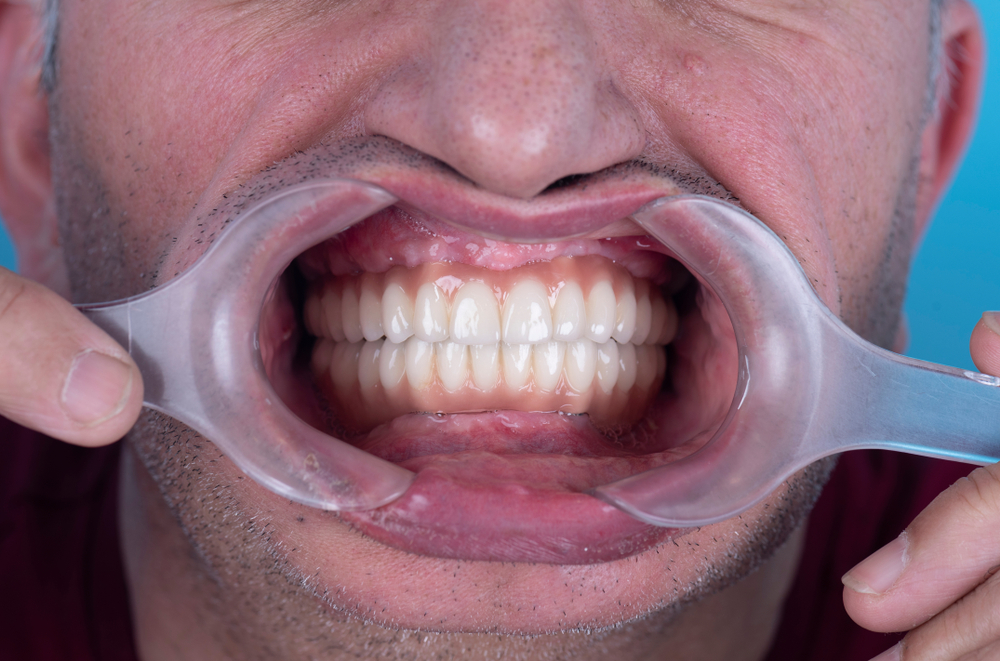
The final restoration itself is typically a fixed bridge made from zirconia or an acrylic and titanium hybrid, chosen based on durability needs and aesthetic goals.
Both All-on-4 and All-on-6 patients go through the same general sequence: temporary teeth placed the day of surgery, followed by the permanent restoration once healing is confirmed complete.
Making the Right Choice Between All-on-4 or All-on-6
All-on-4 tends to work well when there is strong bone density at the front of the jaw and the case is straightforward.
All-on-6 tends to make more sense for heavier bite forces or when added redundancy is worth a slightly more involved surgery.
Talk to a Prosthodontist About All-on-4 or All-on-6 Options, Call Our Team Today to Request an Appointment
To find out which option fits your jaw structure and goals, call our team directly at 301-880-4439 or request your appointment online now!
Choosing the right dentist for a full mouth reconstruction near Calvert County often comes down to training, communication, and how thoroughly they plan your case.
After all, rebuilding your entire smile is a major decision, and not every general dentist has the training to handle it well.
Full mouth reconstruction is a comprehensive process that combines multiple procedures, so experience matters more here than with routine dental work.
Choosing a Dentist for Full Mouth Reconstruction Near Calvert County
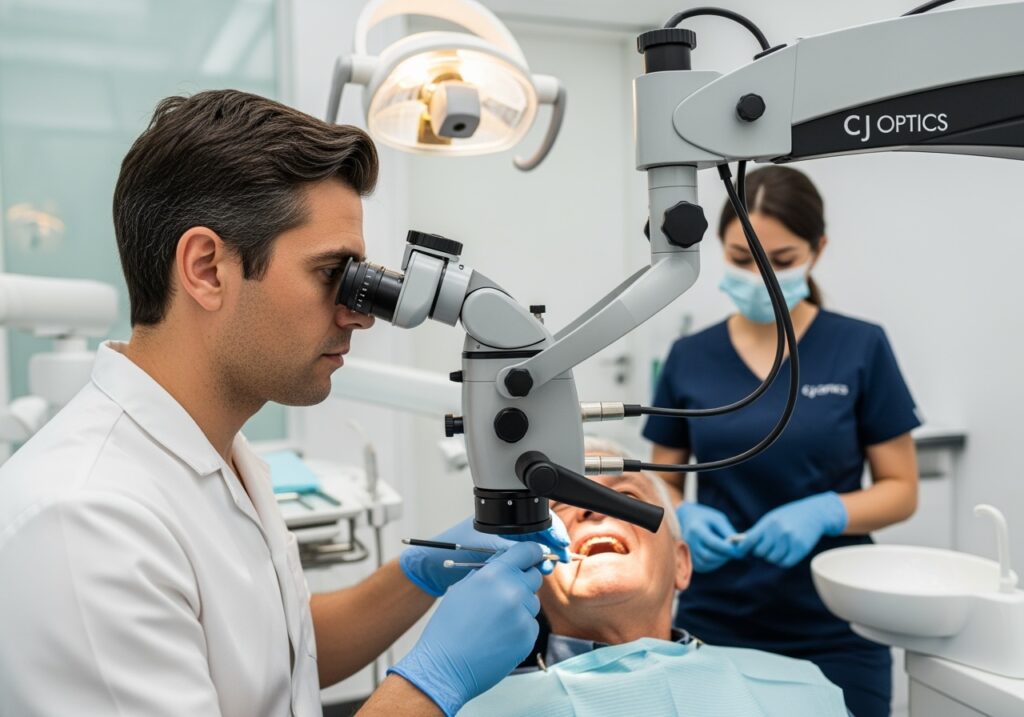
Start by asking whether the dentist is a general practitioner or a prosthodontist, since prosthodontists complete additional years of specialized training in exactly this kind of work.
A dentist who regularly treats complex cases will typically have before and after photos of their own patients, not stock images pulled from elsewhere.
Patient reviews focused specifically on complex restorative work, rather than routine cleanings, can also offer useful insight into a practice’s experience level.
During Your Consultation
Finding the right dentist for a full mouth reconstruction near Calvert County, MD, also means paying attention to how clearly they explain your options during a consultation.
If something feels rushed or unclear during that first visit, it is worth getting a second opinion before committing to treatment.
A practice with more than one experienced provider on staff can also offer a helpful second perspective on your case and treatment options.
Location and scheduling flexibility matter too, especially if your case requires several visits spaced out over a period of months.
Why Prosthodontic Training Matters for Complex Cases
Prosthodontists complete several additional years of accredited training beyond dental school, focused specifically on restoring and replacing teeth.
The American College of Prosthodontists explains that this specialty covers everything from single tooth restorations to full mouth rehabilitation.
That extra training becomes especially relevant in cases involving multiple missing teeth, significant wear, or a combination of procedures like implants, crowns and bridges.
A general dentist can certainly handle many dental needs well, but a prosthodontist has spent years specifically preparing for cases of this scale and complexity.
This distinction is worth asking about directly, since not every practice will volunteer it upfront during a first consultation.
What a Thorough Treatment Plan Looks Like
A complete evaluation typically includes x-rays, a full exam, and a detailed conversation about your goals and concerns.
The dentist should walk you through each phase of treatment, including timeline, cost, and what to expect during recovery between stages.
For patients replacing an entire arch of teeth, the treatment plan may include All-on-X dental implants, which use strategically placed implants to support a full arch of replacement teeth.
A rushed or vague treatment plan is often a sign that the office is not used to handling complex, multi-step cases.
Ask to see examples of similar cases the dentist has completed, ideally with a range of outcomes shown, not just their best result.
A good plan also includes a clear schedule for follow-up visits, since healing between phases needs to be checked along the way.
Questions to Ask Before Committing
Ask how many full mouth reconstructions the dentist has completed and how often they handle cases of similar complexity to yours.
Ask what happens if complications arise partway through treatment, and how those situations are typically handled by the practice.
Since a case like this can involve significant cost, it also helps to ask about financing options and how the office structures payment over time.
Understanding your options for managing a large expense can make the decision feel less overwhelming from a financial standpoint before you commit.
A dentist who is upfront about cost and willing to walk through payment options is usually a good sign of a transparent practice.
Choose Confidently, Choose a Full Mouth Reconstruction Near Calvert County at Southern Maryland Family & Prosthodontic Dentistry
Dr. Joseph Luke and his son Jonathan at Southern Maryland Family & Prosthodontic Dentistry brings advanced prosthodontic training to every full mouth reconstruction case.
Request your appointment online, find hours and directions for the location nearest you, or call our office now at 301-880-4439 for immediate help.
Rebuilding an entire smile is not a single appointment, and knowing what to expect helps you plan around it. That’s why it’s no surprise that we get asked all the time by patients: How long does a full mouth reconstruction take from start to finish?
The truth is, you can’t put an hour limit on it. A full mouth reconstruction is completed in phases, with healing time built in between each step of the process.
A full mouth reconstruction takes anywhere from several months to over a year from start to finish, depending on your specific case.
What Determines the Timeline For How Long a Full Mouth Reconstruction Takes
The number of procedures involved, such as extractions, implants, crowns, or bridges, has the biggest impact on overall length.
Healing time between phases matters too, since bone and tissue need time to recover before the next step can begin safely.
The bone fusion process around dental implants alone typically takes several months, and this cannot be rushed without risking the final result.
A full mouth reconstruction takes longer for patients who need additional procedures like bone grafting before implants can be placed, which affects how long it takes from start to finish overall.
Your overall health and how well your body heals can also shift the timeline in either direction.
What Each Phase Involves
The process usually starts with any necessary extractions or grafting, followed by a healing period before implants are placed.
Once implants have fully bonded with the bone, the final crowns, bridges, or dentures are fitted and adjusted for comfort.
Getting enough calcium and vitamin D during this healing window supports the bone building happening beneath the surface.
Regular checkups throughout ensure each phase is healing properly before moving forward to the next step.
Most patients find that spacing out the workload this way feels far less overwhelming than expected going in.
Ready to Start? Call Southern Maryland Family & Prosthodontic Dentistry Today
Dr. Joseph Luke and his son Jonathan at Southern Maryland Family & Prosthodontic Dentistry will walk you through a personalized timeline during your consultation.
Request your appointment online, find hours and directions for the location nearest you, or call our office now at 301-880-4439 for immediate help.
Not every dentist who advertises full mouth reconstruction has actually handled cases as complex as yours might be.
A prosthodontist trained specifically in restorative work often brings a different level of experience to these larger, multi step cases.
Knowing whether a dentist has the experience to handle a complex full mouth reconstruction usually comes down to a few clear signs.
Signs a Dentist Has the Experience to Handle a Complex Full Mouth Reconstruction
A dentist with genuine experience will have before and after photos of their own patients, showing a range of outcomes rather than just their best results.
You can also verify a dentist’s license and specialty training directly through Maryland’s public verification portal.
An experienced dentist should be able to describe similar cases they have treated, including any complications and how they were resolved.
Vague answers or a reluctance to share specifics are often signs that a dentist has the experience to handle a complex full mouth reconstruction less often than they claim.
Questions Worth Asking Before You Commit
Ask how many complex, multi step cases the dentist completes in a typical year, not just routine dental work.
Ask whether they have specialty training beyond dental school, such as a prosthodontic residency.
It also helps to read reviews carefully, since not every glowing review reflects a genuinely complex case handled well.
A dentist who welcomes these questions and answers them directly is usually a good sign you are in experienced hands.
Choose a Team You Trust, Call Southern Maryland Family & Prosthodontic Dentistry Today
Dr. Joseph Luke and his son Jonathan at Southern Maryland Family & Prosthodontic Dentistry bring advanced prosthodontic treatment and care to every complex case.
Request your appointment online, find hours and directions for the location nearest you, or call our office now at 301-880-4439 for immediate help.
So, how much is the tooth implant out-of-pocket cost in Prince Frederick, Maryland? Will insurance cover any of the fees for dental implants? Here’s the scoop!
Read More
Total mouth rehabilitation is a procedure that involves rebuilding or simultaneously restoring all of the teeth in both the upper and lower jaws.
Read More
Full mouth reconstruction oral surgery is a procedure that involves rebuilding and/or replacing all of the teeth in your mouth.
Read More
Dental implants are used to replace missing teeth in your mouth, and many people prefer them to dentures.
Read More
If you’re missing most of your teeth or wearing dentures, you’re probably self-conscious about your smile.
Read More