
Screw-Retained vs. Cement-Retained Implant Dentures: What’s the Real Difference for Patients
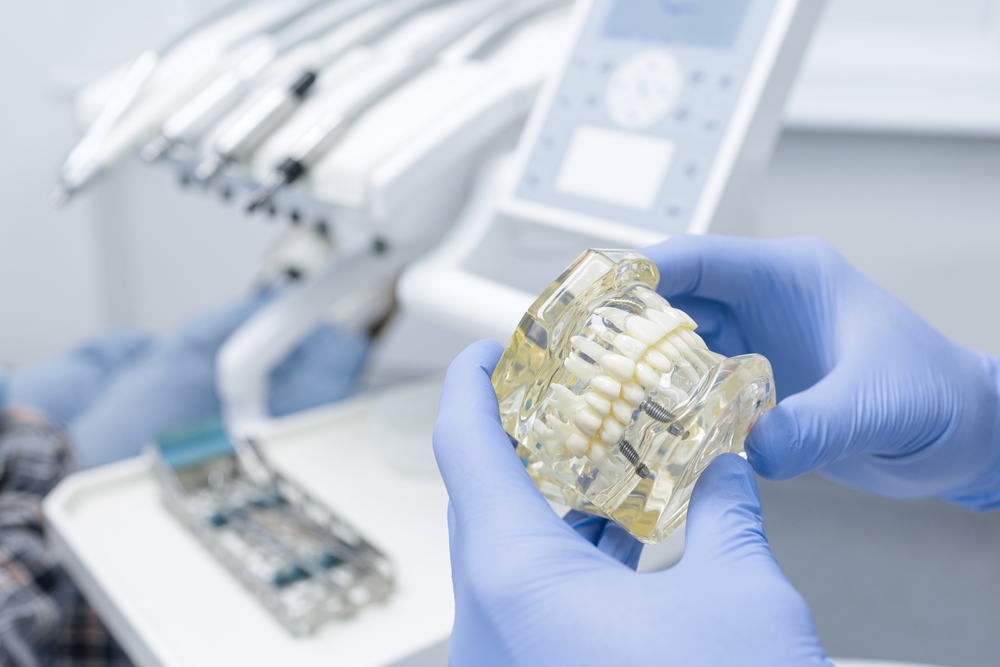
Look closely at the chewing surface of some implant teeth and you might notice a small circle of tooth-colored filling. That dot covers a screw attaching a fixed denture to the dental implants below.
Most dental patients have no idea that tiny dot is there. But this small detail can make a big difference in how easily a tooth can be repaired, cleaned, and evaluated years after it was placed!
Fixed implant dentures are secured to their posts in one of two ways, with a screw or with dental cement. Each method has real advantages and disadvantages for patients.
What Holds Your Restoration in Place
Every implant restoration has three basic components: the implant post in the jawbone, a connector called the abutment, and the crown or teeth that replace the chewing surface you lost.
The difference lies in how that top layer attaches to the abutment. A screw-retained design bolts the tooth on through a small access channel, which is then sealed with tooth-colored filling.
Similar to a traditional crown, a cement-retained restoration is bonded onto the abutment with dental cement. Once completed, there is no access hole in the finished tooth.
Overdentures are a separate class of removable dentures that the patient takes out and puts back in. They attach to implants with special fittings and should not be confused with the fixed options described here.
Why Screw-Retained Implant Dentures Are Easier to Service
The biggest advantage of a screw-retained design is that the teeth can be removed without damaging the denture or the surrounding tissues.
Repairing a tooth, tightening a loose screw, or cleaning biofilm below the gumline is much simpler once the prosthesis comes off. No cement residue is left behind to irritate the peri-implant tissues.
However, there are certain concessions when it comes to tooth position. The access channel must exit through the back or biting surface of the tooth, which can be harder to hide on front teeth.
Where Cement-Retained Teeth Make Sense
Aesthetics and implant location are key factors in deciding between cement and screws. Cemented crowns look very natural and are a great solution for single teeth in the smile line.
While cement-retained teeth offer some advantages for single crowns in the smile zone, they are generally less favored for full-arch restorations.
A cemented restoration may look and function well for years, but there is always a chance it will need to be removed later. This can be difficult and may mean the restoration needs to be remade.
The Hidden Risk Under the Gumline
Excess cement that squeezes out between the implant and the crown tends to hide below the gumline. It can be difficult to detect on an X-ray, and it has been associated with peri-implant disease.
Careful technique and thorough cleanup during placement help reduce this risk. Still, it is one reason many full-arch cases skip cement altogether.
Which Design Full-Arch Implant Dentures Usually Use
Screw retention is most commonly used for full arches. A full-arch bridge is a large investment in your dental health, and being able to remove and clean it protects that investment over time.
Cement is still a good option for single crowns and some short bridges. The right choice depends on your bite, the position of each implant, and how visible the teeth are when you smile.
A prosthodontist can plan the attachment method well before implant surgery.
Repairs and Long-Term Upkeep
Screws can loosen over time and may need adjusting. Acrylic teeth on a hybrid bridge frame can also wear or even chip with years of chewing.
Keeping implant dentures healthy can be as simple as staying on top of regular checkups. At home, small interdental brushes and floss threaders clean under the bridge and around each post.
Book a Prosthodontic Consult and Get a Straight Answer
Deciding between screws and cement is easier with a dentist who designs these restorations every day. Father and son Dr. Joseph Luke and Dr. Jonathan Luke can review your scans and walk you through your options.
Southern Maryland Family & Prosthodontic Dentistry has offices in Lusby, MD, and Leonardtown, MD. Book your prosthodontic consult online today or give us a call at 301-880-4439.