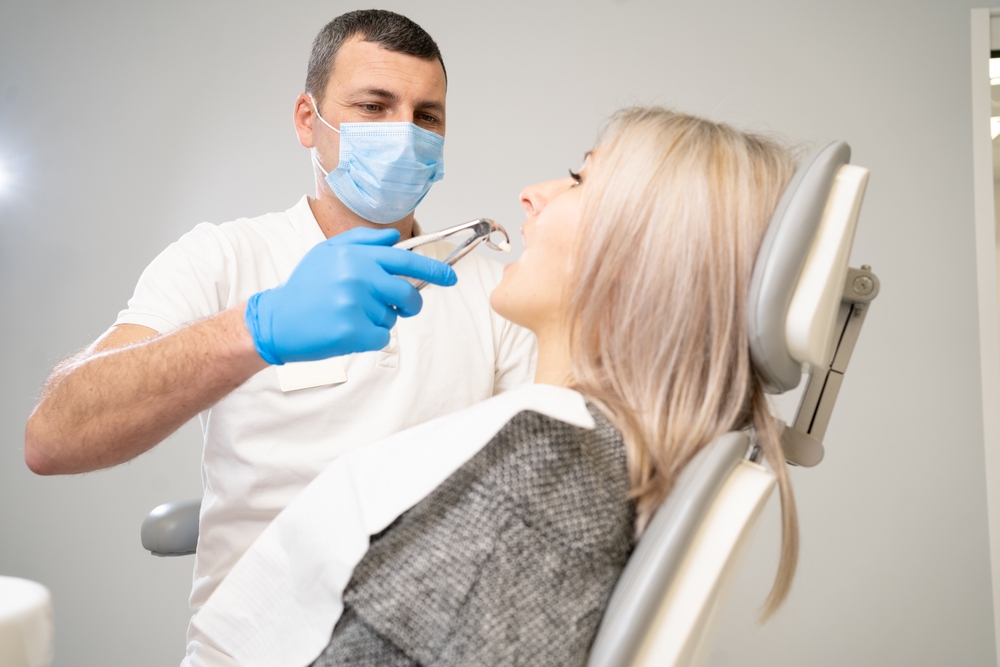
Dental pain rarely waits for a convenient time, and searching for help while you are hurting can feel overwhelming.
Same day extraction and emergency visits are available at Southern Maryland Family & Prosthodontic Dentistry for exactly these situations.
Finding an emergency dentist near Calvert County, MD, who can see you today usually comes down to knowing where to look and what to ask.
Finding an Emergency Dentist Near Calvert County Today Who Can See You Today
Start with a quick search for practices in your immediate area, then call rather than relying only on a website to confirm same day availability.
Many general dentists reserve a few slots each day specifically for urgent cases, so calling first thing in the morning improves your chances of being seen quickly.
If your usual dentist cannot see you, ask if they can recommend another local office that handles emergencies.
An emergency dentist near Calvert County who can see you today is often easier to find than people expect, especially with a direct phone call rather than an online form.
What to Look for in an Unfamiliar Office
Before choosing a new office you have never visited, it helps to read reviews carefully, since not every glowing review reflects a genuine patient experience.
Word of mouth from neighbors or coworkers can also point you toward a practice known for fitting in urgent cases.
What to Ask When You Call
Be specific about your symptoms, including pain level, swelling, and how long the problem has been going on.
Learning how to describe your symptoms clearly helps the office decide how urgently you need to be seen and prepare accordingly.
Ask directly whether same day appointments are available and what the office needs from you before you arrive, such as identification or insurance information.
Confirm whether the office accepts your insurance, or ask about payment options if you are uninsured, so there are no surprises once you arrive.
Asking about expected wait time can also help you plan the rest of your day around the appointment.
What Counts as a True Dental Emergency
Severe pain, uncontrolled bleeding, visible signs of infection such as redness, swelling, or discharge, or a knocked out tooth are all situations that need same day attention.
A chipped tooth without pain or a lost filling, while frustrating, can often wait for a regular appointment instead of requiring an emergency visit.
Knowing the difference helps you communicate urgency accurately over the phone and get seen faster when it truly matters most.
When in doubt, it is always better to call and describe what is happening rather than assuming it can wait on your own.
Why Emergency Dentist Near Calvert County Availability Can Vary by Day
Same day openings depend on how many urgent cases the office is already handling, so availability can shift throughout the week.
Calling as early as possible, ideally right when the office opens, gives you the best chance of securing a same day slot.
Some offices also keep a short waitlist for cancellations, so it can help to ask if one is available even if the first answer is no.
Being flexible about which location you visit, if the practice has more than one, can also open up same day options faster.
Weekday mornings tend to have more openings than late afternoons, since urgent cases often build up as the day goes on.
Need to Be Seen Today? Call Southern Maryland Family & Prosthodontic Dentistry Now
Dr. Joseph Luke and his son Jonathan at Southern Maryland Family & Prosthodontic Dentistry works to fit emergency patients into the schedule whenever possible.
Request your appointment online, find hours and directions for the location nearest you, or call our office now at 301-880-4439 for immediate help.
Not every dentist who advertises full mouth reconstruction has actually handled cases as complex as yours might be.
A prosthodontist trained specifically in restorative work often brings a different level of experience to these larger, multi step cases.
Knowing whether a dentist has the experience to handle a complex full mouth reconstruction usually comes down to a few clear signs.
Signs a Dentist Has the Experience to Handle a Complex Full Mouth Reconstruction
A dentist with genuine experience will have before and after photos of their own patients, showing a range of outcomes rather than just their best results.
You can also verify a dentist’s license and specialty training directly through Maryland’s public verification portal.
An experienced dentist should be able to describe similar cases they have treated, including any complications and how they were resolved.
Vague answers or a reluctance to share specifics are often signs that a dentist has the experience to handle a complex full mouth reconstruction less often than they claim.
Questions Worth Asking Before You Commit
Ask how many complex, multi step cases the dentist completes in a typical year, not just routine dental work.
Ask whether they have specialty training beyond dental school, such as a prosthodontic residency.
It also helps to read reviews carefully, since not every glowing review reflects a genuinely complex case handled well.
A dentist who welcomes these questions and answers them directly is usually a good sign you are in experienced hands.
Choose a Team You Trust, Call Southern Maryland Family & Prosthodontic Dentistry Today
Dr. Joseph Luke and his son Jonathan at Southern Maryland Family & Prosthodontic Dentistry bring advanced prosthodontic treatment and care to every complex case.
Request your appointment online, find hours and directions for the location nearest you, or call our office now at 301-880-4439 for immediate help.
A cracked or badly infected tooth rarely waits for a convenient appointment, which is why same day care matters so much.
Same day extraction is one of the services designed specifically for patients dealing with sudden dental pain.
Yes, a Calvert County emergency dentist can pull your tooth the same day in many cases, depending on how quickly you reach out.
What Same-Day Extraction Involves
A same day visit typically starts with an exam and x-ray to confirm the tooth cannot be saved, then the dentist may have to pull your tooth the same day in Calvert County.
Local anesthesia numbs the area completely, so the procedure itself is far less uncomfortable than most patients expect.
Not every situation qualifies as a true medical emergency, and knowing the difference can help you decide how quickly you need to be seen.
What to Do Before You Arrive
Call ahead so the office can prepare for your visit and let you know what to bring, including any current medications.
Driving after local anesthesia is usually fine for most patients, though some prefer arranging a ride just in case.
Eating a light meal beforehand, unless told otherwise, can help you feel steadier once the numbness sets in.
Getting an Emergency Dentist to Pull Your Tooth the Same Day in Calvert County
Reaching out as early in the day as possible gives the office the best chance of fitting you in before closing.
Being upfront about your pain level and symptoms on the phone helps the team prepare before you arrive.
Most patients are relieved to leave the same day with the problem tooth already addressed.
In Pain Right Now? Call Southern Maryland Family & Prosthodontic Dentistry to Pull a Tooth the Same Day
Dr. Joseph Luke’s team at Southern Maryland Family & Prosthodontic Dentistry works to see emergency patients quickly whenever possible.
Request your appointment online, find hours and directions for the location nearest you, or call 301-880-4439 for immediate help.
Dentures change what you can eat, and not for the better. Many patients quietly stop enjoying certain foods within months of getting them.
If eating with dentures has become frustrating, dental implants offer a solution that addresses the root cause rather than working around it. The difference in chewing ability between the two options is not subtle.
This post covers why dentures limit what you can eat and what dental implants do differently.
Why Eating With Dentures Is So Difficult
Dentures rest on gum tissue rather than anchoring into bone. That means they shift under chewing pressure, especially on harder or chewier foods.
Most denture wearers adapt by avoiding problem foods entirely. Steak, raw vegetables, crusty bread, and nuts are among the first to go.
This dietary restriction has real nutritional consequences over time. Patients who cannot chew effectively tend to favor softer, processed foods that lack the fiber and protein a healthy diet requires.
How Eating With Dentures Changes With Implants
Implants anchor directly into the jawbone and do not move. The prosthetic arch attached to them functions much closer to natural teeth than any removable denture can.
Patients who make the switch consistently report being able to eat foods they had given up entirely. That restored freedom changes daily quality of life in ways that go beyond the mouth.
Research shows that complete denture wearers produce as little as 10% of natural bite force. Implant-supported restorations restore significantly more, which explains why patients can eat foods that dentures made impossible.
Explore Implant Options, Call Our Office Today to Book Your Consultation
Struggling with dentures does not have to be permanent. Our doctors at Southern Maryland Family & Prosthodontic Dentistry serve patients throughout St. Mary’s and Calvert County, MD, with implant solutions designed around your goals and bone structure.
Call us at 301-880-4439 today to speak with a member of our staff or request your evaluation online and get the personalized treatment plan you deserve.
The benefits of full-arch surgery compared with traditional dentures go well beyond aesthetics. The differences affect bone health, daily function, and quality of life in ways most patients do not expect.
While traditional dentures have helped people function for generations, but the limitations compound over time. Slipping, adhesives, bone loss, and restricted diets are not minor inconveniences.
This post covers what sets full-arch implant surgery apart, where dentures fall short, and how to know which path fits your situation.
What Full-Arch Surgery Actually Does
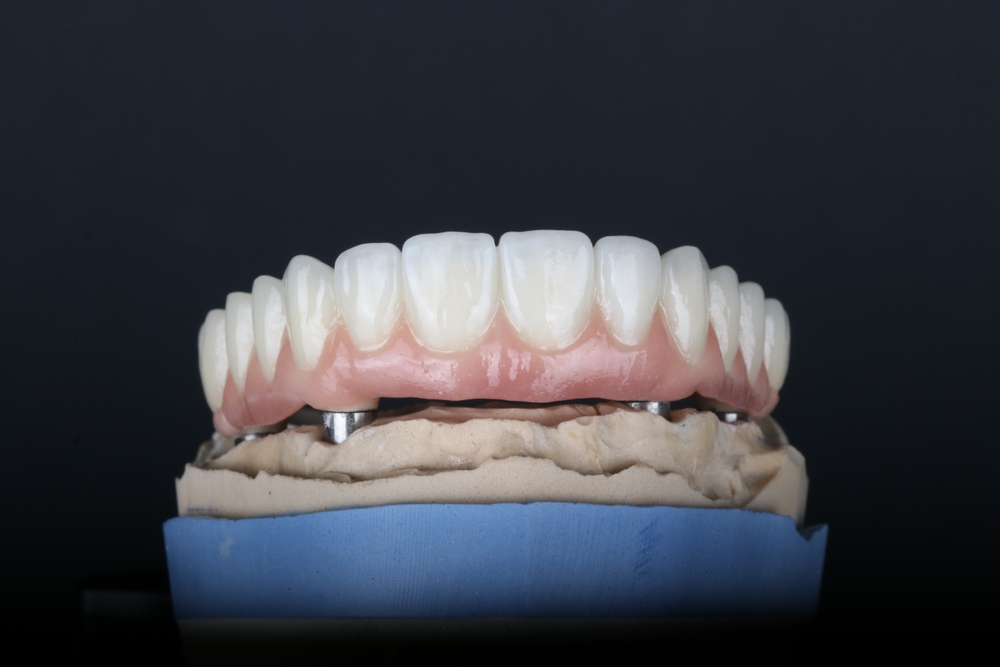
Full-arch surgery replaces an entire arch of missing teeth using implant posts anchored into the jawbone. The restored arch attaches to those posts and functions like natural teeth.
The posts replace the function of natural tooth roots. They stimulate the jawbone during chewing, which prevents the bone loss that begins after teeth are removed.
Dentures sit on top of the gum tissue and provide no stimulation to the bone beneath. That structural difference drives most of the long-term outcomes that separate the two options.
The Benefits of Full-Arch Surgery Compared With Traditional Dentures for Bone Health
Jawbone resorption begins within weeks of tooth loss and accelerates with years of denture wear. The face gradually takes on a sunken appearance as bone that once supported teeth diminishes.
Full-arch implants halt that process entirely. The posts integrate with the bone through osseointegration, giving the jaw the stimulation it needs to maintain density.
Patients who wait often require bone grafting before implants become viable. This is one of the strongest arguments for acting before significant loss occurs.
Chewing Force and Daily Function
Patients researching the benefits of full-arch surgery compared with traditional dentures are often most surprised by the difference in chewing force. Dentures restore roughly 25% of normal biting ability.
Full-arch implants restore approximately 90% of natural chewing force. Steak, raw vegetables, and foods that dentures make difficult or impossible become accessible again.
The nutritional impact of restricted chewing is real and cumulative. Patients who cannot chew effectively tend toward softer, processed foods that affect overall health over time.
What Are the Benefits of Full-Arch Surgery Compared With Traditional Dentures for Maintenance?
Dentures require daily removal, overnight soaking, adhesives, and periodic relining. The fit changes as bone resorbs, and full replacement is typically needed every five to eight years.
Full-arch implants are maintained like natural teeth. Brushing, water flossing, and twice-yearly professional cleanings are all that most patients require.
The cumulative cost of adhesives, relining, and replacement narrows the investment gap between dentures and implants significantly over a decade.
Comfort and Confidence in Daily Life
Denture wearers frequently describe anxiety about slippage during meals or conversation. That social burden affects confidence in ways that extend well beyond the mouth.
Full-arch restorations are fixed in place. Patients speak, eat, and laugh without thinking about their teeth, which is exactly what most people want from tooth replacement.
Patients who transition from dentures to implants consistently describe the change as life-altering. Function, confidence, and daily ease all shift dramatically after the switch.
Who Should Consider Making the Switch
Patients struggling with loose dentures, restricted diets, or bone loss concerns are the strongest candidates.
A consultation and imaging assessment determine whether bone density is sufficient for implants.
Patients with existing bone loss may need grafting first. Most healthy adults without uncontrolled systemic disease are candidates with the right preparation.
Your provider will assess your anatomy, health history, and goals before recommending a treatment path.
Explore Options for Full-Arch Surgery Near Calvert County at Southern Maryland Family & Prosthodontic Dentistry
A consultation is the clearest way to understand which option is right for your specific situation.
Our doctors at Southern Maryland Family & Prosthodontic Dentistry serves patients throughout St. Mary’s and Calvert County, MD.
Call us at 301-880-4439 today to speak with a member of our staff or request your evaluation online and get your personalized treatment plan that you’ll be proud of.
Severe tooth pain does not wait for a convenient appointment slot. When the pain is significant enough to disrupt sleep, eating, or daily function, the timeline for treatment becomes the first question.
Getting an emergency tooth extraction in Prince Frederick as quickly as possible depends on the severity of your symptoms and how your dental provider handles urgent cases. Same-day care is often possible for patients who call early.
This post covers what affects tooth extraction timing, what to expect when you arrive, and how to get seen as fast as possible.
What Makes a Tooth Extraction an Emergency
Not every toothache qualifies as a dental emergency. Pain that is manageable with over-the-counter medication and has no swelling or fever can often wait for a scheduled appointment.
A true emergency involves symptoms that cannot be safely managed at home. Severe, unrelenting pain, visible swelling, a fever, or an abscess that is actively spreading all require same-day evaluation.
A tooth that has been knocked out or fractured at the gumline also constitutes an emergency. Time matters significantly in traumatic cases, and delaying care worsens outcomes.
How Quickly Can an Emergency Tooth Extraction in Prince Frederick Be Performed?
Most dental practices that offer emergency services can see urgent patients the same day, particularly when the office is contacted first thing in the morning. Afternoon and walk-in availability varies by practice.
The extraction itself typically takes 20 to 40 minutes once the patient is in the chair. Simple extractions on fully erupted teeth move quickly under local anesthesia with minimal preparation.
Surgical extractions involving broken teeth, impacted roots, or significant surrounding infection take longer and require more involved planning. These cases may require a short wait for imaging before the provider can proceed.
What Happens During an Emergency Extraction Appointment
Your provider will take X-rays or a cone beam scan to assess the tooth, surrounding bone, and root structure before beginning. This step cannot be skipped safely, even when pain is severe.
Local anesthesia is administered once imaging confirms the extraction plan. Most patients feel significant pressure during the procedure but not sharp pain once the anesthesia takes full effect.
The socket is cleaned and packed after the tooth is removed. Your provider will give you aftercare instructions and discuss replacement options before you leave.
Emergency Tooth Extraction in Prince Frederick, MD: What to Do While You Wait
If you cannot be seen immediately, cold compresses applied to the outside of the jaw reduce swelling and provide temporary relief. Do not apply heat, which can accelerate infection spread.
Over-the-counter ibuprofen manages pain more effectively than acetaminophen for dental emergencies because it also reduces inflammation. Follow dosing instructions carefully and do not exceed the recommended amount.
Avoid chewing on the affected side and stay away from very hot or very cold foods. These steps manage discomfort without making the underlying problem worse.
When to Go to an Emergency Room Instead
Facial swelling that extends toward the eye, jaw, or neck is a sign that infection has spread beyond the tooth. This situation requires hospital-level care rather than a dental office visit.
Difficulty breathing or swallowing alongside dental pain is a medical emergency. Call 911 immediately if these symptoms develop, as they can indicate a life-threatening infection spreading toward the airway.
A high fever accompanying dental pain also warrants an emergency room visit if your dental provider cannot see you immediately. Systemic infection requires medical management alongside dental treatment.
Get Same-Day Dental Care at Southern Maryland Family & Prosthodontic Dentistry, Call Our Office Now
Urgent dental problems deserve urgent attention. Our doctors at Southern Maryland Family & Prosthodontic Dentistry serves patients throughout St. Mary’s and Calvert County, MD, with compassionate care for emergency extractions and acute dental needs.
Call us at 301-880-4439 today to speak with a member of our staff or request your evaluation online and get your tooth extracted today!
Most patients researching full-arch surgery in Prince Frederick, MD, want to know the implant count before anything else. The answer depends on your bone density, bite force, and the protocol your provider recommends.
How many implants are typically used in full-arch surgery falls between four and six for most patients.
This post covers what drives that number, how protocols differ, and why individualized planning matters more than any fixed formula.
Why the Number of Implants Varies
Implant posts act as artificial tooth roots anchored directly into the jawbone. The full-arch prosthetic attaches to those posts and relies on them for all its stability.
Too few posts distribute chewing force unevenly and raise the risk of long-term failure. Too many add surgical complexity without meaningful structural benefit.
The goal is the minimum number needed to support the arch safely for decades. That number is different for every patient.
The All-on-4 Protocol
All-on-4 uses four implants per arch, two placed vertically in front and two angled in the back. The angled placement avoids sinuses and nerve canals without requiring bone grafting in many cases.
Four implants work well for patients with moderate bone density and average bite force. The protocol is efficient and reduces surgical time and recovery demands.
The trade-off is load distribution. With only four posts, each implant carries more individual stress during chewing.
How Many Implants Are Typically Used in Full-Arch Surgery With All-on-6 or All-on-X?
As the number suggests, for all-on-six, six implants spread chewing force more evenly across the full arch length. This reduces stress on each post and generally produces stronger long-term stability. All-on-X implants can have any number of implants used to make sure the smile is secure.
Patients with heavier bite force, grinding habits, or those wanting maximum durability tend to respond better to six implants. The wider foundation also supports a more robust prosthetic design.
Here’s the Deal: six well-placed implants outperform eight placed without precise planning. Provider skill and imaging matter as much as the number itself.
When More Than 6 Implants Are Needed
Patients with exceptionally strong bone or very high bite force occasionally benefit from seven or eight implants. This is less common but clinically appropriate in specific cases.
Patients with a history of implant failure may also qualify for a higher-implant protocol. Each additional post adds structural redundancy that reduces overall risk.
Your provider determines the count based on imaging and functional goals. It is never an arbitrary decision.
How Many Implants Are Typically Used in Full-Arch Surgery With Bone Loss?
Patients with significant bone loss present a more complex planning scenario. Reduced volume limits both implant placement and the number of posts the jaw can safely support.
Bone grafting restores adequate volume in many cases before surgery proceeds. Some patients with severe upper jaw bone loss qualify for zygomatic implants anchored in the cheekbone instead.
A 3D cone beam CT scan is the only accurate way to assess bone and plan placement precisely. That imaging drives every well-designed full-arch case.
What Your Consultation Will Determine
Your consultation includes imaging, a bite analysis, a medical history review, and a goals discussion. All of these inform the final implant count recommendation.
Smoking, uncontrolled diabetes, and certain medications affect osseointegration and may modify the protocol. These variables influence how conservatively the plan is designed.
The implant count is a structural decision that directly shapes how well your restoration functions and how long it lasts.
Full-Arch Surgery Near Prince Frederick, MD, Can Save Your Smile
A personalized consultation is the only reliable way to determine how many implants your arch requires.
Our doctors at Southern Maryland Family & Prosthodontic Dentistry serves patients in St. Mary’s and Calvert County in MD, with advanced full-arch planning and prosthodontic expertise.
Call us at 301-880-4439 today to speak with a member of our staff or request your evaluation online and get your personalized treatment plan that you’ll be proud of.
Dental pain that comes on suddenly forces an immediate decision most people are not prepared to make. The fear of losing a tooth makes it harder to think clearly about the right path forward.
Whether the tooth can be saved or if you need an emergency tooth extraction in Calvert County, MD, depends on specific clinical factors. Most dentists exhaust every option to preserve a natural tooth before recommending removal.
This post covers how that decision gets made, what signs point toward saving a tooth, and when tooth extraction is genuinely the better outcome.
Why Dentists Always Try to Save the Tooth First
Natural teeth have roots that stimulate the jawbone and anchor neighboring teeth in position. Losing that structure sets off a chain reaction that affects the entire bite over time.
Every tooth worth saving is worth saving. A root canal, crown, or periodontal treatment preserves function and avoids the cascade of changes that follow tooth loss.
The goal at your appointment is always to find a path to preservation first. Extraction is the conclusion only when no viable path remains.
Signs an Emergency Tooth Extraction in Calvert County is Needed
A cracked or chipped tooth with an intact root is often restorable with a crown. Surface damage does not automatically mean the tooth is lost.
Decay that has not yet reached the pulp chamber can be addressed with a filling or crown depending on the extent. Once decay invades the pulp, a root canal becomes the next line of defense before extraction is considered.
Infection treated early with antibiotics and root canal therapy resolves without removing the tooth in many cases. The window for this option closes quickly as infection spreads.
When an Emergency Tooth Extraction Becomes Necessary
Some situations leave no viable path to preservation. A tooth broken at or below the gumline cannot support a crown and has no structure to restore.
Severe infection that has destroyed the surrounding bone or spread beyond the root tips cannot always be resolved with root canal therapy alone. In these cases, an emergency tooth extraction stops the spread before the infection reaches adjacent teeth or the jaw.
Advanced periodontal disease with significant bone loss also removes the foundation the tooth needs to remain stable. Keeping a tooth without adequate bone support leads to chronic pain and accelerating damage to neighbors.
When an Emergency Tooth Extraction Cannot Wait
Dental infections do not resolve on their own. A tooth that is causing severe pain, facial swelling, or fever requires same-day evaluation without delay.
Swelling that extends toward the jaw, neck, or eye is a medical emergency that goes beyond routine dental care. These symptoms could be a tooth abscess or other serious medical condition that requires urgent attention regardless of time of day.
Trauma that shatters a tooth or drives it into the socket may require immediate extraction to prevent infection and allow proper healing of the surrounding tissue.
What Happens After the Tooth Is Removed
Extraction is not the end of the treatment plan. It is the beginning of the next phase, which involves replacing the missing tooth before neighboring teeth begin to shift.
Dental implants are the most durable long-term replacement option, restoring both function and bone stimulation. Bridges and partial dentures are alternatives depending on the patient’s goals and bone condition.
Leaving a gap untreated allows adjacent teeth to drift, alters the bite, and accelerates bone loss in the extraction site. Prompt planning for replacement produces the best long-term outcome.
Get Evaluated at Southern Maryland Family & Prosthodontic Dentistry
A same-day evaluation is the fastest way to know whether your tooth can be saved.
Our doctors at Southern Maryland Family & Prosthodontic Dentistry serves patients throughout Leonardtown, MD, and Lusby, MD, with gentle, experienced care for urgent dental needs.
Call us at 301-880-4439 today to speak with a member of our staff or request your evaluation online and get the treatment you need right away!
Candidacy for full-arch surgery in St. Mary’s County, MD, comes down to bone density, gum health, and overall medical status. Most healthy adults with significant tooth loss qualify with the right preparation.
Most patients who ask this question about candidacy assume the answer depends entirely on how many teeth they have left. The reality is more nuanced and more encouraging than that.
This post covers the key factors that determine candidacy for full-arch surgery, what can be done when barriers exist, and what to expect from a consultation.
What Full-Arch Surgery Actually Requires
Implant posts must integrate with living bone through a process called osseointegration. That means the jawbone needs adequate volume and density to receive and support the posts long-term.
Gums must be free of active infection before surgery proceeds. Periodontal disease left untreated creates a hostile environment that significantly raises implant failure risk.
Beyond the mouth, overall health matters. Patients need to be able to tolerate a surgical procedure and the healing period that follows over several months.
Who Is a Good Candidate for Full-Arch Surgery in St. Mary’s County, MD?
Adults with multiple missing teeth, failing teeth, or teeth beyond repair are the primary candidates. The extent of tooth loss matters less than the condition of the bone and gums beneath.
Patients who have worn dentures for years and are unhappy with the fit, stability, or dietary restrictions often find full-arch implants transformative. The switch from removable to fixed is one of the most impactful changes in modern dentistry.
Good general health, non-smoking status, and a commitment to long-term oral hygiene all strengthen candidacy. These habits directly influence how well implants integrate and how long they last.
Factors That Can Complicate Candidacy
Bone loss is the most common barrier, and it is not automatically disqualifying. Bone grafting restores volume in many patients and opens the door to implant placement after several months of healing.
Uncontrolled diabetes impairs bone healing and raises the risk of implant failure. Patients with well-managed diabetes, however, are generally good candidates with proper surgical planning.
Active smokers face higher failure rates due to reduced blood flow and slower healing. Cessation before surgery meaningfully improves outcomes and is strongly recommended.
What About Bone Loss From Years of Denture Wear?
Long-term denture wear accelerates the bone resorption that begins after tooth loss. Patients who have worn dentures for a decade or more often present with significant bone loss by the time they seek implants.
That does not rule out full-arch surgery in St. Mary’s County, MD, but it does require careful imaging and planning. A 3D cone beam CT scan maps existing bone precisely and reveals where grafting is needed.
Some patients with severe upper jaw bone loss qualify for zygomatic implants anchored in the cheekbone. This approach bypasses the need for extensive grafting in complex cases.
Medications and Health Conditions to Disclose
Bisphosphonate medications used to treat osteoporosis can affect bone healing and must be disclosed before any implant planning begins. Your provider will coordinate with your physician when these medications are involved.
Immunosuppressants, blood thinners, and certain antidepressants also affect healing timelines and surgical planning. A complete medication review is a standard part of every candidacy evaluation.
Conditions like heart disease and cancer history do not automatically disqualify patients. They require additional evaluation and coordination between providers before surgery proceeds.
What Your Consultation Will Cover
A candidacy evaluation includes 3D imaging, a full medical history review, a gum assessment, and a discussion of your goals and timeline. This visit gives both you and your provider a clear picture of what is possible.
Patients who are not immediately ready for implants leave with a roadmap showing exactly what preparation is needed. That might mean treating gum disease, completing a bone graft, or stabilizing a systemic condition first.
Find Out if You Qualify for Full-Arch Surgery, Call Our Top-Rated Providers Today to Book Your Consultation
A consultation is the only reliable way to know whether you are a candidate. Our doctors at Southern Maryland Family & Prosthodontic Dentistry serves patients throughout Leonardtown, MD, in St. Mary’s County, MD, with advanced prosthodontic planning and full-arch expertise.
Call us at 301-880-4439 today to speak with a member of our staff or request your evaluation online and get your personalized treatment plan that you’ll be proud of.
Choosing the right provider for fixed implant dentures in Leonardtown, Maryland, is one of the most important decisions you could ever make for your smile.
You’re trusting the dentist you choose with your entire experience, your final results after dentures, and your long-term oral health!
Below, we discuss why finding the right provider is so important and how our team at Southern Maryland Family and Prosthodontic Dentistry can help you bring your smile to life.
Comprehensive Services Mean You Can Trust Your Smile to One Team
At Southern Maryland Family and Prosthodontic Dentistry, our team — from the dentists all the way down to the front desk staff — handles everything from initial consultation through your final restoration.
You won’t bounce between multiple offices or worry about coordinating with other offices.
Our Outstanding Team Delivers the Highest Quality Care
Father-and-son team Drs. Joseph T. Luke and Jonathan T. Luke have decades of combined expertise and make a special commitment to patient comfort. But don’t just take our word for it? We have over 250 5-star reviews from real patients.
Every member of our team shares our patient-first values, creating a welcoming environment where you’ll feel completely at ease!
We Lead the Way With Advanced Technology for Better Results
We’re constantly adapting the latest dental technology to make your experience safer, more effective, and more comfortable.
This means more precise fixed implant dentures in Leonardtown, Maryland, faster healing times, and beautifully natural-looking results you can be proud of!
A Membership Makes Care Affordable Even if You Don’t Have Insurance
Don’t have dental insurance?
Don’t worry!
Our memberships offer substantial discounts on procedures, free preventive care, and no annual maximums to worry about.
This flexible option opens the door to high-quality dental care for nearly any budget.
Requesting Your Appointment for a Fixed Implant Dentures in Leonardtown, Maryland, is Easy
You can make online appointment requests, so scheduling your consultation fits effortlessly into your busy schedule. Don’t want to wait for your request to be approved? No problem! Call us at 301-880-4439.
Reaching out and getting started has never been simpler!
Reclaim Your Confidence and a Brilliant Smile With the Help Of Our Trusted Prosthodontic Team in Southern MD
We’re just a phone call or a form fill away and ready to help. We’re also currently accepting new patients so don’t wait, your perfect smile is waiting for you.