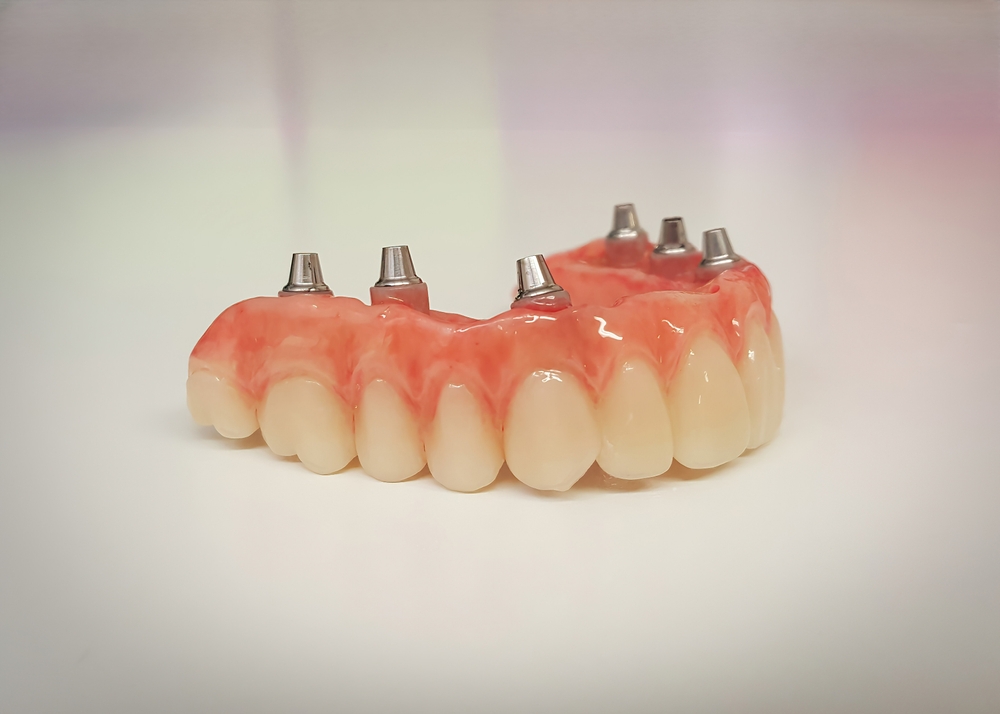
Full mouth reconstruction recovery happens in stages, not as one continuous process.
The first few days feel the most intense, while the deeper healing that makes results permanent continues quietly for months afterward.
The direct answer: expect noticeable swelling, soreness, and a liquid or soft food diet for the first several days following your full mouth reconstruction.
Then noticeable improvements over the following weeks, while the underlying bone and implant integration continues healing for several months in the background.
What the First Few Days of Full Mouth Reconstruction Actually Feel Like
Swelling, mild bruising, and soreness are common in the first several days after surgery. These symptoms typically peak around day two or three, then steadily improve from there.
Pain is usually managed with prescribed medication and generally decreases noticeably within the first week.
Most patients stick to soft or liquid foods during this period, since chewing puts pressure on healing tissue.
Why Full Mouth Reconstruction Involves More Than One Healing Phase
Full mouth reconstruction is typically completed in phases, with healing time built in between each step. Soft tissue around the gums usually heals within a few weeks, but that is only the visible part of recovery.
The deeper process, bone fusing around each implant, takes considerably longer. This phase, called osseointegration, generally follows a set protocol of three to four months in the lower jaw and closer to six to eight months in the upper jaw, since upper jaw bone tends to be less dense.
If bone grafting is needed before implants can be placed, that adds its own healing window, typically another three to six months, before the rest of the reconstruction can move forward.
Recovery also varies depending on which arch is being treated. Lower jaw implants generally heal faster than upper jaw implants, since the bone tends to be denser and supports faster integration in that area.
What Slows Down or Speeds Up Recovery
The number of procedures involved has the biggest impact on total recovery time. A case involving extractions, bone grafting, and implants naturally takes longer than one requiring only crowns or bridges.
Following post-operative instructions closely, avoiding smoking, and attending follow-up visits all support faster, more predictable healing.
Smoking in particular is known to slow bone healing and increase the risk of implant complications, since smoking restricts blood flow and impairs the body’s ability to repair tissue. Which is why most providers recommend quitting well before treatment begins if possible.
Our expert providers walk patients through what to expect at each phase, since healing time between stages needs to be checked before moving forward.
What Full Recovery From Full Mouth Reconstruction Feels Like
Once healing is complete, most patients describe eating comfortably again as the biggest change, particularly foods they had avoided for years.
Speech often improves as well, since missing or damaged teeth can affect pronunciation in ways people do not always notice until it is corrected.
The entire process, from first procedure to final results, can take anywhere from several months to over a year depending on how many procedures are involved.
Managing Discomfort and Diet During Recovery
Over-the-counter pain relievers are often enough after the first few days, though prescription medication may be used initially depending on the extent of the procedures.
Cold compresses applied to the outside of the face during the first 48 hours help control swelling more than most patients expect.
Diet typically progresses in stages: liquids and very soft foods for the first several days, then gradually introducing foods that require more chewing as healing allows.
Talk to Dr. Joseph Luke About Full Mouth Reconstruction, Call Us Today
At Southern Maryland Family and Prosthodontic Dentistry, Dr. Joesph Luke and his son Dr. Jonathan Luke have been providing patients in St. Mary’s County and Calvert County with full mouth reconstruction since the mid-1990s.
Call us now at 301-880-4439 to request an appointment online.
Do dental implants last a lifetime? There is one fact about implants that make many people wonder if they really last a lifetime, the use of titanium.
Titanium has a unique property in that it fuses with bone, a level of natural integration unmatched by many other materials used in dentistry today. With proper care, titanium implants can last a lifetime.
The implant itself typically lasts for a lifetime, but the crown or prosthetic that sits on top typically needs replacement or repair within 10 to 15 years due to normal wear and tear.
How Titanium Fuses With Bone
In many cases, a dental implant can last for the rest of a person’s life!
The titanium post fuses directly with the jawbone, becoming part of that bone structure and allowing it to function just like a natural tooth root.
A 25-year retrospective study tracking implant patients who kept up with regular maintenance found survival rates of 95 percent for the implant itself and 88 percent for the prosthetic on top.
Why the Crown or Prosthetic Wears Differently Than the Implant
The chewing surface, the crown, will wear, chip, or become loose over time. This does not mean the implant itself has failed, and in most cases the implant will not need to be touched at all.
After several decades, most patients will need to replace the crown once or twice, while the implant itself typically remains untouched.
Why Dental Implants Really Last Longer Than a Bridge or Denture
An implant may cost more upfront than a bridge or denture. However, implants last far longer than either alternative, which often need relining or full replacement every few years.
Since the implant itself can last decades, that upfront cost spreads out over time and, in many cases, ends up costing less than repeatedly replacing a bridge or denture every 10 to 15 years.
What Actually Threatens Whether Dental Implants Last a Lifetime
Peri-implantitis, an infection of the soft and hard tissue surrounding an implant, is the leading cause of failure.
A 20-year meta-analysis of implant survival found an average survival rate around 93 percent, with smoking, uncontrolled diabetes, and nighttime teeth grinding identified as the major risk factors.
Poor oral hygiene is the single worst offender. Just like natural teeth, plaque buildup around an implant can cause problems, though the resulting issues can be more serious than what develops around a natural tooth.
Early Warning Signs Worth Taking Seriously
Bleeding, swelling, soreness, or tenderness around an implant are signs worth taking seriously and having checked promptly. Left untreated, these symptoms can progress to bone loss around the implant, which is difficult to reverse and can eventually lead to implant failure.
A crown that feels even slightly loose is worth mentioning at your next appointment rather than waiting for your next scheduled cleaning.
The Hidden Factors That Can Affect the Lifespan of Dental Implants
Regular checkups help prevent peri-implantitis before it becomes a bigger problem. Brushing and flossing around an implant the same way you would a natural tooth goes a long way toward preventing complications.
Patients who keep up with follow-up maintenance appointments see meaningfully better long-term results than those who treat the implant as a one-time procedure.
Bone density at the time of surgery also plays a major role in long-term success.
Genetics and overall health can influence healing time and how well an implant holds up, though these factors are largely outside your control.
What is within your control is consistent maintenance and addressing problems early, before they become bigger issues.
Talk to Our Team About Whether Dental Implants Really Last for Your Situation, Call Us Today!
Learn more about what kind of results you can expect with dental implants by calling our team today at 301-880-4439 or requesting an appointment online now.
At Southern Maryland Family and Prosthodontic Dentistry, Dr. Joesph Luke and his son Dr. Jonathan Luke have been providing patients in St. Mary’s County and Calvert County with proper dental implants since the mid-1990s.
Dental emergencies can occur when you least expect them. Most dental problems can actually wait for a regular appointment, but some require immediate attention.
Severe dental pain, a knocked out permanent tooth, uncontrolled bleeding, visible swelling or dental infection, or a broken tooth with sharp edges, or an exposed nerve, would all require an emergency dental exam in Calvert County.
What Qualifies as an Emergency Dental Exam in Calvert County
A knocked out tooth is one of the most time sensitive dental emergencies, and reimplanting a permanent tooth within 30 minutes to an hour offers the best chance of success.
Facial swelling along with pain can indicate the beginnings of an infected or abscessed tooth or gum.
Similarly, a cracked or broken tooth with pain from an exposed nerve should be evaluated the same day rather than waiting for an opening in your primary dental provider’s schedule.
What Can Usually Wait for a Regular Appointment
Simple chipping of a tooth with no pain, a lost filling that does not hurt, or mild tooth sensitivity would typically be addressed through a regular scheduled appointment rather than as an emergency dental exam in Calvert County.
What to Do Before You Reach the Dentist
For a knocked out tooth, pick it up by the crown only and avoid touching the root surface. If it can be gently placed back into the socket, do so. Otherwise, keep it moist by holding it in milk until you reach our office.
For bleeding, apply firm, steady pressure to the area with clean gauze. If the bleeding does not stop, go to the emergency room rather than waiting to be seen at our office.
Talk to Our Team About Emergency Dental Exam in Calvert County Options
Dental emergencies happen when we least expect them. Our office is open to see you for dental emergencies.
At Southern Maryland Family and Prosthodontic Dentistry, Dr. Joesph Luke and his son Dr. Jonathan Luke have been providing emergency dental care to patients in St. Mary’s County and Calvert County since the mid-1990s.
Call us now at 301-880-4439 to request an appointment online.
Most people picture weeks without any teeth after full arch surgery. That is not actually how the process works anymore, and knowing what really happens changes how people commit to and prepare for treatment.
The direct answer for how long it actually takes to recover from full arch surgery in MD: the surgical day itself takes a few hours, and most patients leave with a temporary fixed set of teeth the same day.
Full comfort typically returns within two to four weeks, while the underlying bone continues healing for several months in the background.
What Actually Happens the Day of Full Arch Surgery
Most patients receive IV sedation or, in some cases, general anesthesia, so very little is felt during the procedure itself. Any remaining teeth are removed, implants are placed into the jawbone, and a temporary fixed prosthesis is typically attached before you leave the office.
That last detail surprises a lot of first time patients. Dr. Luke’s patients go home the same day with functional, non-removable teeth rather than an empty mouth or a removable denture.
Some cases only require local anesthesia with oral sedation, while more extensive cases involving multiple extractions and implant placement often call for IV sedation to keep the patient comfortable throughout a longer appointment.
Because of the sedation involved, arranging a ride home and having someone stay with you for the first 24 hours is essential. Most patients feel groggy and tired that evening rather than in significant pain.
The First 48 Hours After Full Arch Surgery in MD
Swelling, bruising, and general discomfort peak during the first two days.
Ice packs applied in 20 minute intervals help manage swelling more effectively than most people expect, and sleeping with your head elevated the first night or two also reduces morning puffiness.
Prescribed pain medication typically keeps discomfort manageable during this window.
A strict liquid or soft food diet is necessary from the start, since the temporary prosthesis needs to stay undisturbed while healing begins.
What to Expect in Weeks Two Through Four of Full Arch Surgery in MD Recovery
By the end of the first week, most patients notice swelling and soreness beginning to fade. Soft foods like eggs, well cooked vegetables, and ground meats are usually cleared around week two, though guidelines vary depending on how many implants were placed.
Some patients initially feel like the temporary teeth sit slightly loose. This sensation typically resolves on its own as swelling goes down and tissue heals around week two or three.
By week four, most patients describe feeling largely back to normal. Swelling is gone, pain is minimal, and the temporary teeth feel stable and comfortable.
Why Full Bone Healing Still Takes Months Longer
The visible recovery, feeling comfortable and eating normally, happens well before the implants are fully fused to the bone.
Osseointegration continues in the background for three to six months, which is why the final permanent prosthesis is not placed until that process is confirmed complete.
Returning to Work and Daily Activities
Many patients return to desk work within a few days to a week, though physically demanding jobs may require additional time off.
Our experienced providers tailor this guidance to each patient’s specific procedure and job requirements during the consultation.
Factors That Affect How You Recover From Full Arch Surgery in MD
The number of implants placed, whether extractions were needed at the same appointment, and your overall health all influence how quickly you move through each recovery stage.
Patients in good general health with strong bone density often progress through the visible recovery milestones faster than those requiring additional procedures like bone grafting at the same time.
Following post-operative instructions closely, including diet restrictions and any prescribed medication, remains the single biggest factor within your control for a smooth recovery.
Talk to Our Team About Full Arch Surgery in MD Today
To find out what your specific recovery timeline would look like, call our team directly at 301-880-4439 or request your appointment online now.
At Southern Maryland Family and Prosthodontic Dentistry, Dr. Joesph Luke and his son Dr. Jonathan Luke have been providing excellent care to patients in St. Mary’s County and Calvert County since the mid-1990s and are looking forward to helping you fall in love with your smile again.
Waiting months after a tooth extraction to receive an implant is something of the past for a growing number of patients.
While immediate placement is recommended in some situations, getting dental implants the same day as an extraction is not an option for everyone. Whether a specific extraction site qualifies depends largely on how the extraction itself went.
What Makes You a Candidate for Dental Implants the Same Day as an Extraction
Immediate placement requires that the facial bone wall of the empty socket was not damaged during extraction, and that it is thick enough to support the implant without additional bone grafting.
Two other conditions matter just as much: the site needs adequately thick soft tissue surrounding it, and there must be no active infection present at the extraction site.
When Same-Day Placement Is Not the Right Approach
Active infection, thin or damaged bone walls, or thin soft tissue that would struggle to heal around the implant are all reasons to delay placement for a few months instead.
Same-day implant placement generally has high success rates when the site genuinely qualifies for dental implants the same day as an extraction.
Attempting immediate placement at a site that is not truly ready increases the risk of implant failure rather than saving time.
What a Consultation Determines
X-rays, other imaging, and a physical evaluation of the site determine whether immediate, early, or delayed placement makes the most sense for your specific situation.
Waiting a little longer often pays off by avoiding the failure risk that comes with placing an implant too soon.
Bone density and gum health can look adequate on the surface while still falling short of what immediate placement actually requires, which is why imaging matters more than a visual check alone.
Talk to Our Team About Dental Implants the Same Day as an Extraction, Call Our Experts Today
Find out if immediate implant placement is right for you by calling our team now at 301-880-4439 or book a consultation online.
At Southern Maryland Family and Prosthodontic Dentistry, Dr. Joesph Luke and his son Dr. Jonathan Luke have been providing excellent care to patients in St. Mary’s County and Calvert County since the mid-1990s. We’re here to help!
Bone loss after tooth loss can happen gradually, often before anyone notices. Whether that loss is significant enough to affect your treatment is a different question entirely. So, do you always need a bone graft before implants? In short, not always.
A bone graft before implants only becomes necessary once bone loss has progressed enough to compromise the width, height, or density needed for safe implant placement.
Why Bone Loss Happens in the First Place
A tooth root in the jaw stimulates the surrounding bone to keep it strong.
Once a tooth is gone, that stimulation disappears and the bone begins to resorb, with the rate and amount varying based on the tooth’s location and how long it has been missing.
Periodontal disease and injury to the mouth can also cause bone loss, and the longer an area goes without a tooth or implant, the more that bone tends to decline.
When a Bone Graft Before Implants Is Actually Necessary
If imaging reveals insufficient bone width, height, or density to safely place an implant, a bone graft is typically recommended first.
Grafts can use the patient’s own bone, donor bone, or a synthetic material, and usually take three to six months to fully integrate with the surrounding bone before implant placement can move forward.
When You Might Skip the Bone Graft Entirely
Patients with sufficient natural bone density can often receive implants without any grafting at all.
Angled implant placement, similar to what is used in All-on-4 procedures, can also work around limited bone in certain areas without requiring a graft first.
Bone density tends to matter more than age alone. A younger patient with significant bone loss may still need grafting, while an older patient with well preserved bone may not need it at all.
A consultation with our expert dentist is the most reliable way to know what your specific case requires.
Talk to Our Team About Whether You Need a Bone Graft Before Implants, Call Us Now
At Southern Maryland Family and Prosthodontic Dentistry, Dr. Joesph Luke and his son Dr. Jonathan Luke have been providing excellent care to patients in St. Mary’s County and Calvert County since the mid-1990s. We’re here to help!
For more information regarding bone grafts or to speak with a member of our staff,, call 301-880-4439 or request your appointment online now.
Full arch implant procedures give patients missing most or all of the teeth in one arch a permanent option. Choosing between All-on-4 or All-on-6 usually comes down to available bone and long-term goals rather than personal preference.
Both use titanium implants to support a full arch of teeth with a fixed prosthesis. The number in each name reflects how many implants anchor the arch.
How All-on-4 or All-on-6 Actually Differ
All-on-4 places two front implants straight down to maximize use of available bone, with two back implants angled to avoid the sinus and nerve structures.
This configuration works well even with limited bone volume, often avoiding the extensive grafting other approaches require.
All-on-6 adds two more implants, generally spaced further apart across the arch. These extra implants act as a safety net, distributing chewing force over a larger area and providing backup if one implant does not fully integrate.
Why All-on-6 Requires More Detailed Imaging
Because the implants sit further apart in an All-on-6 case, planning requires more detailed imaging of nerves, sinuses, and bone density to place each one accurately.
A CT scan is standard for both procedures, but the spacing planning for All-on-6 tends to be more involved, since each implant needs enough distance from the others.
This ensures the bite force distributes evenly across the arch without interfering with adjacent implant sites.
Why Implant Count Actually Matters Long Term
A widely known principle sums up the tradeoff: All-on-4, but none-on-3. If one implant fails in a four-implant arch, the remaining three generally cannot safely support a fixed prosthesis on their own.
Research on implant-supported restorations has found that adequate bone volume matters more than implant count alone.
Patients with heavy grinding habits or a particularly strong bite are often steered toward All-on-6, since spreading the load across more implants reduces the risk of failure.
What a Consultation Actually Determines
A review of your dental history, medical history, and a full oral exam determines whether there is enough bone for All-on-4 without grafting, or whether All-on-6 would distribute forces more safely across your arch.
An oral surgeon and prosthodontist typically evaluate candidates together, weighing dental history, overall health, and treatment goals.
With bone grafting available beforehand when needed, most patients can ultimately be prepared for either option.
The consultation also covers realistic expectations, since both approaches work best for patients with straightforward healing profiles rather than complex medical histories.
All-on-4 vs. All-on-6 Cost Differences
All-on-4 is typically less expensive than All-on-6, since fewer implants are involved.
Surgical time runs a bit longer for All-on-6, but that difference shows up in the appointment itself rather than the overall price gap, which mainly comes down to implant count.
Healing Time and What the Final Restoration Looks Like
Overall healing and rehabilitation time is about the same for both procedures, with most patients receiving permanent teeth within three to six months.
The final restoration itself is typically a fixed bridge made from zirconia or an acrylic and titanium hybrid, chosen based on durability needs and aesthetic goals.
Both All-on-4 and All-on-6 patients go through the same general sequence: temporary teeth placed the day of surgery, followed by the permanent restoration once healing is confirmed complete.
Making the Right Choice Between All-on-4 or All-on-6
All-on-4 tends to work well when there is strong bone density at the front of the jaw and the case is straightforward.
All-on-6 tends to make more sense for heavier bite forces or when added redundancy is worth a slightly more involved surgery.
Talk to a Prosthodontist About All-on-4 or All-on-6 Options, Call Our Team Today to Request an Appointment
To find out which option fits your jaw structure and goals, call our team directly at 301-880-4439 or request your appointment online now!
Knowing whether your tooth needs an emergency extraction or can still be saved often comes down to a few clear warning signs.
A cracked, throbbing, or badly damaged tooth raises an urgent question, can it be repaired, or is it beyond saving.
Same-day extraction options exist for these situations, but not every damaged tooth actually needs one.
Signs Your Tooth Needs an Emergency Extraction
Severe, worsening pain along with visible swelling in the gums or face is one of the clearest signs something urgent is happening.
A tooth that is loose, badly fractured below the gumline, or visibly infected with pus at the base usually cannot be saved with a filling or crown.
If your tooth needs an emergency extraction, waiting typically only makes the infection or damage worse.
When a Tooth Can Still Be Saved
Minor cracks, chips, or cavities without significant pain often respond well to a filling, crown, or root canal instead of removal.
Even a tooth with some decay can often be saved if the inner pulp and root structure are still healthy.
If dental anxiety is part of what is keeping you from calling, knowing what to expect can make that first call easier.
When Extraction Is the Safer Option
An infection at the root of a tooth can spread beyond the tooth itself if it is not addressed quickly.
The body’s immune response works hard to contain infection, but a severely damaged tooth can overwhelm that defense over time.
At that point, removing the tooth is often the safest way to stop the spread.
In Severe Pain? Book Your Emergency Extraction in Calvert County With Dr. Luke
Drs. Joseph and Jonathan Luke at Southern Maryland Family & Prosthodontic Dentistry can evaluate your tooth and let you know the same day whether it can be saved or needs to come out.
Request your appointment online, find hours and directions for the location nearest you, or call our office now at 301-880-4439 for immediate help.
Tooth pain has a way of getting pushed to the bottom of the to do list, especially when life is already busy. If you wait too long to get an infected tooth extracted, the infection rarely stays contained to just that one tooth.
Oral surgery becomes a more urgent conversation once an infection is involved, since the risks grow the longer it sits untreated.
What Happens When You Wait Too Long to Get an Infected Tooth Extracted
Pain and swelling typically get worse before they get better, since the infection continues growing inside the tooth and surrounding bone.
An abscess can form at the root, creating a pocket of infection that antibiotics alone often cannot fully resolve on their own.
Managing discomfort with an over the counter pain reliever can help in the short term, but it does not address the underlying infection causing the pain.
Many patients wait, hoping the pain will simply pass, only to find it returns worse within a few days.
How the Infection Progresses Over Time
The bone surrounding the tooth can begin to break down the longer an infection sits untreated in that area.
Nearby teeth and gum tissue can also become affected, turning what started as a single problem tooth into a larger issue.
If you wait too long to get an infected tooth extracted, the additional damage can eventually affect more than one tooth or area of the jaw.
What could have been a simple extraction early on sometimes turns into a more involved procedure the longer it goes unaddressed.
This is one of the main reasons dentists recommend addressing an infected tooth as soon as symptoms appear, rather than waiting to see if it improves on its own.
How Infection Can Spread Beyond the Tooth
In rare but serious cases, an untreated dental infection can spread into the jaw, neck, or bloodstream.
Sepsis is the body’s extreme, life threatening response to a spreading infection, and dental infections are one possible starting point.
This outcome is uncommon, but it illustrates why an infected tooth should never be treated as something that can simply wait indefinitely.
Recognizing the warning signs early can make a real difference if an infection begins to spread beyond the mouth.
Signs the Infection Is Getting Worse
Increasing swelling in the face, jaw, or neck is one of the clearest signs the infection is progressing rather than resolving.
Difficulty opening your mouth fully, trouble swallowing, or a fever are all signs that the infection needs prompt attention.
A bad taste or odor that will not go away, even with brushing, often signals that an abscess has developed.
Any of these symptoms on their own is worth a call to the office, and having more than one present usually means the situation needs same day attention.
Why You Shouldn’t Wait Too Long to Get an Infected Tooth Extracted
At this stage, extraction is often the fastest way to remove the source of the infection and allow healing to begin.
Waiting any longer at this point only increases the risk of complications requiring more extensive treatment down the line.
Most patients feel noticeably better within a day or two of having the infected tooth removed.
Don’t Wait Any Longer, Call Southern Maryland Family & Prosthodontic Dentistry Today
Drs. Joseph and Jonathan Luke at Southern Maryland Family & Prosthodontic Dentistry can evaluate an infected tooth quickly and explain your options clearly.
Request your appointment online, find hours and directions for the location nearest you, or call our office now at 301-880-4439 for immediate help.
Choosing the right dentist for a full mouth reconstruction near Calvert County often comes down to training, communication, and how thoroughly they plan your case.
After all, rebuilding your entire smile is a major decision, and not every general dentist has the training to handle it well.
Full mouth reconstruction is a comprehensive process that combines multiple procedures, so experience matters more here than with routine dental work.
Choosing a Dentist for Full Mouth Reconstruction Near Calvert County
Start by asking whether the dentist is a general practitioner or a prosthodontist, since prosthodontists complete additional years of specialized training in exactly this kind of work.
A dentist who regularly treats complex cases will typically have before and after photos of their own patients, not stock images pulled from elsewhere.
Patient reviews focused specifically on complex restorative work, rather than routine cleanings, can also offer useful insight into a practice’s experience level.
During Your Consultation
Finding the right dentist for a full mouth reconstruction near Calvert County, MD, also means paying attention to how clearly they explain your options during a consultation.
If something feels rushed or unclear during that first visit, it is worth getting a second opinion before committing to treatment.
A practice with more than one experienced provider on staff can also offer a helpful second perspective on your case and treatment options.
Location and scheduling flexibility matter too, especially if your case requires several visits spaced out over a period of months.
Why Prosthodontic Training Matters for Complex Cases
Prosthodontists complete several additional years of accredited training beyond dental school, focused specifically on restoring and replacing teeth.
The American College of Prosthodontists explains that this specialty covers everything from single tooth restorations to full mouth rehabilitation.
That extra training becomes especially relevant in cases involving multiple missing teeth, significant wear, or a combination of procedures like implants, crowns and bridges.
A general dentist can certainly handle many dental needs well, but a prosthodontist has spent years specifically preparing for cases of this scale and complexity.
This distinction is worth asking about directly, since not every practice will volunteer it upfront during a first consultation.
What a Thorough Treatment Plan Looks Like
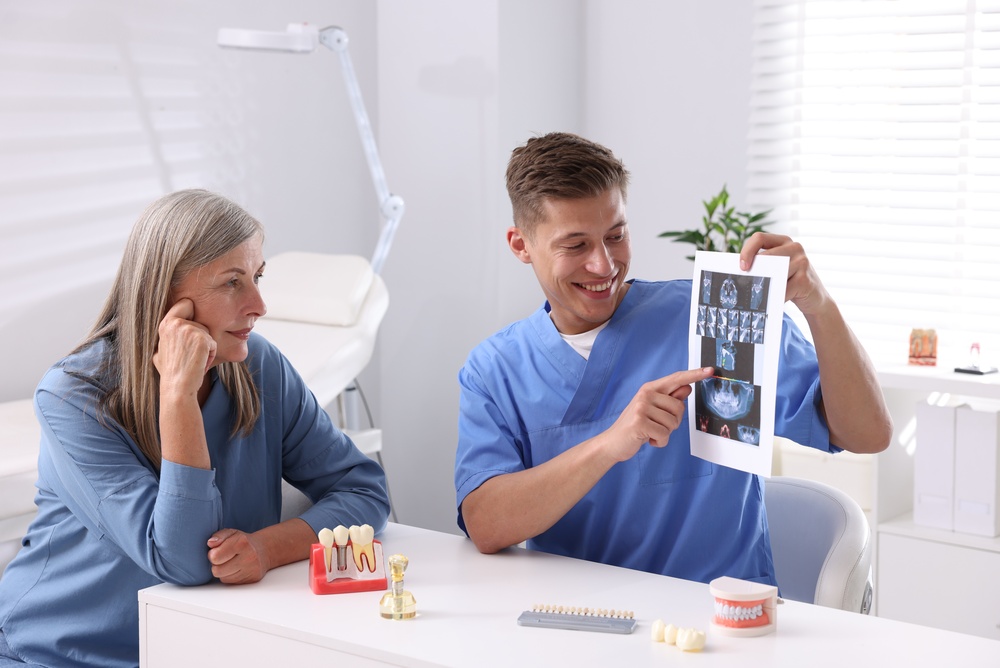
A complete evaluation typically includes x-rays, a full exam, and a detailed conversation about your goals and concerns.
The dentist should walk you through each phase of treatment, including timeline, cost, and what to expect during recovery between stages.
For patients replacing an entire arch of teeth, the treatment plan may include All-on-X dental implants, which use strategically placed implants to support a full arch of replacement teeth.
A rushed or vague treatment plan is often a sign that the office is not used to handling complex, multi-step cases.
Ask to see examples of similar cases the dentist has completed, ideally with a range of outcomes shown, not just their best result.
A good plan also includes a clear schedule for follow-up visits, since healing between phases needs to be checked along the way.
Questions to Ask Before Committing
Ask how many full mouth reconstructions the dentist has completed and how often they handle cases of similar complexity to yours.
Ask what happens if complications arise partway through treatment, and how those situations are typically handled by the practice.
Since a case like this can involve significant cost, it also helps to ask about financing options and how the office structures payment over time.
Understanding your options for managing a large expense can make the decision feel less overwhelming from a financial standpoint before you commit.
A dentist who is upfront about cost and willing to walk through payment options is usually a good sign of a transparent practice.
Choose Confidently, Choose a Full Mouth Reconstruction Near Calvert County at Southern Maryland Family & Prosthodontic Dentistry
Dr. Joseph Luke and his son Jonathan at Southern Maryland Family & Prosthodontic Dentistry brings advanced prosthodontic training to every full mouth reconstruction case.
Request your appointment online, find hours and directions for the location nearest you, or call our office now at 301-880-4439 for immediate help.