
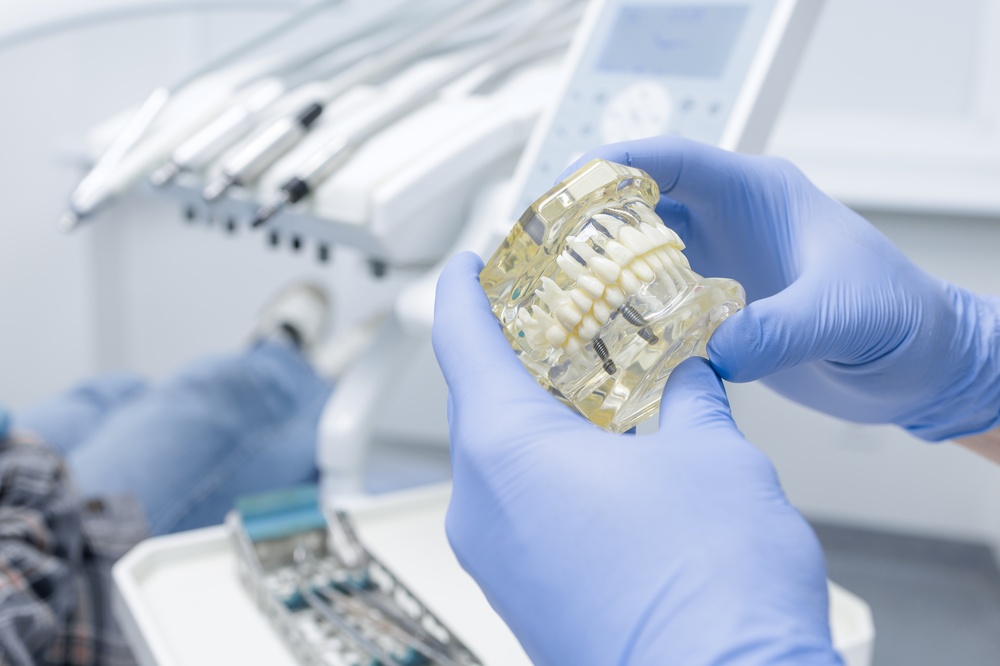
One missing tooth can have you chewing on one side, covering your mouth when you laugh, or passing on a crisp apple. A dental bridge or dental implant can put an end to all three.
Both are proven ways to replace one missing tooth, and both can look and feel natural once in place.
What sets them apart is how each is anchored, how long it lasts, and what it asks of your jaw.
A specialist can help you weigh those trade-offs and settle on the replacement that will serve you best for years.
Why Both Options Feel Similar Once They Are in Place
Ask around, and you will hear strong opinions about which replacement feels more like a natural tooth. Day to day, most people find the two similar for chewing and comfort.
A prosthodontist may lean toward one approach when the shape of your jaw or bite calls for it.
In many cases, though, either can work well for one missing tooth.
The choice tends to depend on your jawbone, your budget, and how long you can wait.
How a Bridge Closes the Gap
A bridge fills the space without replacing the tooth’s root. A false tooth, called a pontic, sits in the gap and is held in place by crowns on either side.
To anchor those crowns, the dentist shapes down the adjacent teeth, even healthy ones.
A bridge is often the quicker of the two options. Most bridges are prepared, fitted, and cemented in place over two visits spread across a couple of weeks.
Because a bridge rests on teeth you already have, no surgery is required.
How an Implant Rebuilds the Tooth from the Root Up
An implant replaces the root itself. A small titanium post is inserted into the jawbone, where the two bond together over roughly two to six months.
You can wear a temporary tooth over the site while it heals. Once the foundation is ready, a custom crown attaches to the post and completes the tooth.
Because the implant stands on its own, the teeth around it stay untouched.
The trade-off is oral surgery, which carries some risk of infection or nerve injury, plus several months before the final crown goes on.
Which Option Lasts Longer and Protects Your Jaw?
Over the years, the two options age in different ways.
Bridges often need replacement after five to seven years, though some last more than a decade.
An implant post can last a lifetime with good care, while the crown on top generally lasts around 15 years.
Studies place the 10-year success rate for implants near 97%.
The jawbone responds differently to each, too. With no root in the gap, bone beneath a bridge can wear away over time.
An implant bonds with the surrounding bone, helping keep it healthy and intact.
Daily care plays a part as well. Flossing under a bridge takes special tools, and decay is more common in the teeth that support it than around a single implant.
Dental Implant or Bridge for One Missing Tooth? How to Tell Which Is Right for You
Your health, goals, and timeline each shape which choice makes more sense. A bridge may suit you well when:
- You want the gap to be closed within a few weeks.
- You would prefer to avoid oral surgery.
An implant may suit you well when:
- You are in good overall health with a jawbone strong enough to hold the post.
- You want to avoid reshaping healthy teeth to support a crown.
- You are 18 or older, as a younger jaw may still be growing.
- You can wait several months for a longer-lasting result.
Conditions that slow healing can make implant surgery less suitable, so your overall health is part of the first conversation.
Weighing Upfront Cost Against Lifespan
Price is often the deciding factor for people torn between a bridge and an implant.
A single implant is typically estimated at $3,000 to $4,500, depending on your needs and insurance.
A traditional bridge often costs less upfront, though final pricing depends on materials and coverage.
Over the long run, implants tend to hold up better and need replacing less often, which can offset the higher starting price.
Why a Prosthodontist’s Training Helps with This Choice
Prosthodontists complete two to three extra years of specialty training after dental school, with a focus on crowns, bridges, and implants.
The additional training shows in the details, from gauging whether the jawbone can hold a post to shaping a crown that blends with your smile.
You can weigh both options with Dr. Joseph and Dr. Jonathan Luke. Dr. Joseph Luke is a prosthodontist who has practiced in Leonardtown since 1989.
Dr. Jonathan Luke, who grew up in Leonardtown, brings postgraduate training in oral and maxillofacial surgery to the surgical side of implant care.
A Confident Bite Can Start with a Single Visit
The path back to chewing on both sides and laughing without a second thought can begin with one visit.
Our team can help you compare a bridge and an implant against your bone, goals, and schedule.
Request an appointment online or call our office at 301-880-4439 to talk through the best way to replace one missing tooth.
0 comments on “Dental Implant or Bridge for One Missing Tooth? How Each Works, What Lasts, and Who Each Suits”