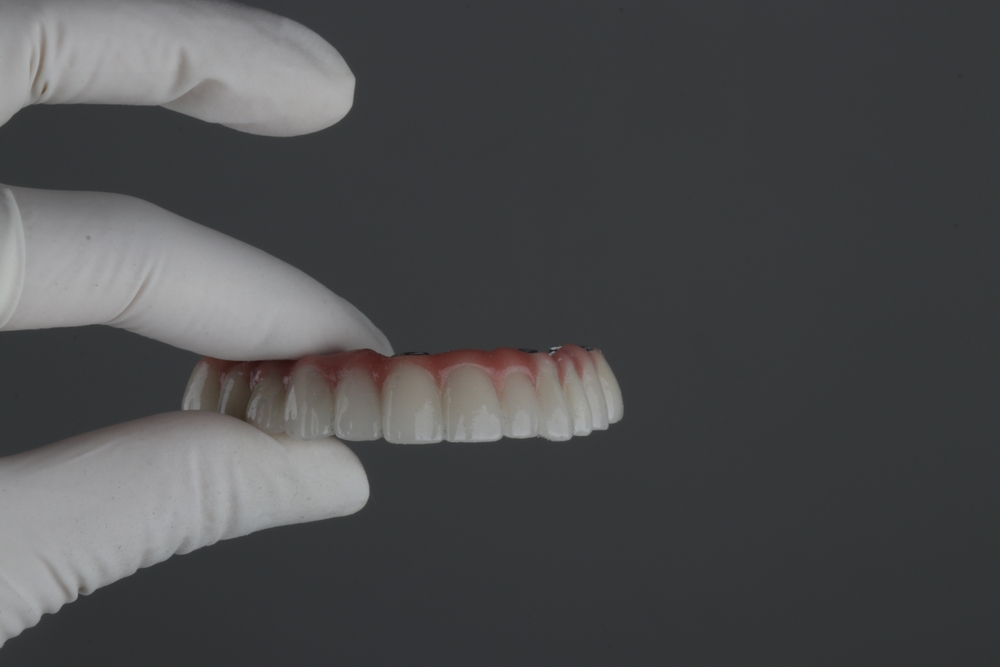
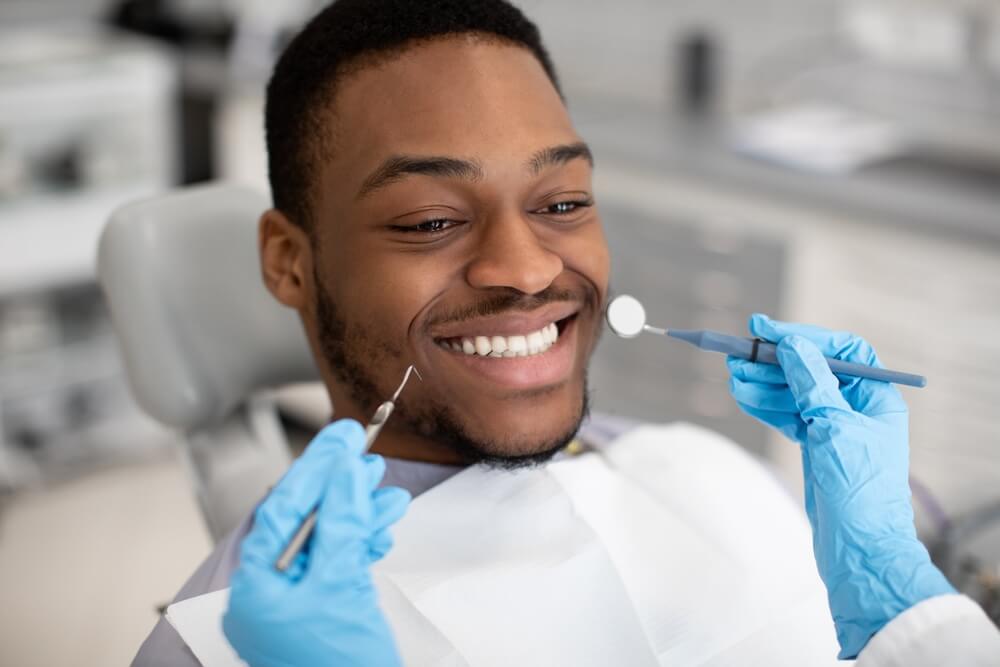
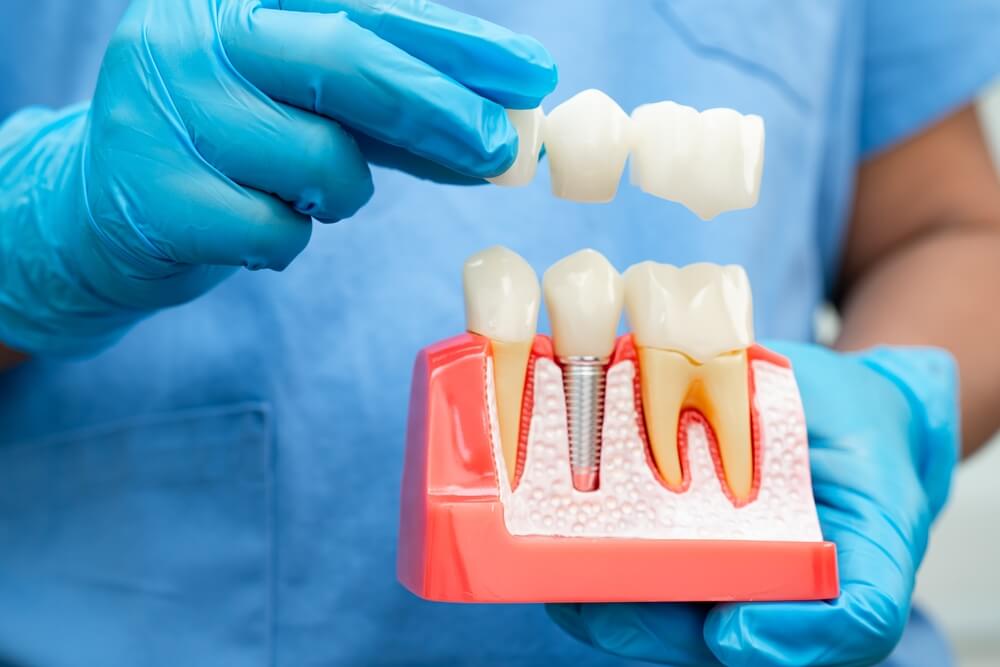
Do dental implants last a lifetime? There is one fact about implants that make many people wonder if they really last a lifetime, the use of titanium.
Titanium has a unique property in that it fuses with bone, a level of natural integration unmatched by many other materials used in dentistry today. With proper care, titanium implants can last a lifetime.
The implant itself typically lasts for a lifetime, but the crown or prosthetic that sits on top typically needs replacement or repair within 10 to 15 years due to normal wear and tear.
How Titanium Fuses With Bone
In many cases, a dental implant can last for the rest of a person’s life!
The titanium post fuses directly with the jawbone, becoming part of that bone structure and allowing it to function just like a natural tooth root.
A 25-year retrospective study tracking implant patients who kept up with regular maintenance found survival rates of 95 percent for the implant itself and 88 percent for the prosthetic on top.
Why the Crown or Prosthetic Wears Differently Than the Implant
The chewing surface, the crown, will wear, chip, or become loose over time. This does not mean the implant itself has failed, and in most cases the implant will not need to be touched at all.
After several decades, most patients will need to replace the crown once or twice, while the implant itself typically remains untouched.
Why Dental Implants Really Last Longer Than a Bridge or Denture
An implant may cost more upfront than a bridge or denture. However, implants last far longer than either alternative, which often need relining or full replacement every few years.
Since the implant itself can last decades, that upfront cost spreads out over time and, in many cases, ends up costing less than repeatedly replacing a bridge or denture every 10 to 15 years.
What Actually Threatens Whether Dental Implants Last a Lifetime
Peri-implantitis, an infection of the soft and hard tissue surrounding an implant, is the leading cause of failure.
A 20-year meta-analysis of implant survival found an average survival rate around 93 percent, with smoking, uncontrolled diabetes, and nighttime teeth grinding identified as the major risk factors.
Poor oral hygiene is the single worst offender. Just like natural teeth, plaque buildup around an implant can cause problems, though the resulting issues can be more serious than what develops around a natural tooth.
Early Warning Signs Worth Taking Seriously
Bleeding, swelling, soreness, or tenderness around an implant are signs worth taking seriously and having checked promptly. Left untreated, these symptoms can progress to bone loss around the implant, which is difficult to reverse and can eventually lead to implant failure.
A crown that feels even slightly loose is worth mentioning at your next appointment rather than waiting for your next scheduled cleaning.
The Hidden Factors That Can Affect the Lifespan of Dental Implants
Regular checkups help prevent peri-implantitis before it becomes a bigger problem. Brushing and flossing around an implant the same way you would a natural tooth goes a long way toward preventing complications.
Patients who keep up with follow-up maintenance appointments see meaningfully better long-term results than those who treat the implant as a one-time procedure.
Bone density at the time of surgery also plays a major role in long-term success.
Genetics and overall health can influence healing time and how well an implant holds up, though these factors are largely outside your control.
What is within your control is consistent maintenance and addressing problems early, before they become bigger issues.
Talk to Our Team About Whether Dental Implants Really Last for Your Situation, Call Us Today!
Learn more about what kind of results you can expect with dental implants by calling our team today at 301-880-4439 or requesting an appointment online now.
At Southern Maryland Family and Prosthodontic Dentistry, Dr. Joesph Luke and his son Dr. Jonathan Luke have been providing patients in St. Mary’s County and Calvert County with proper dental implants since the mid-1990s.
Waiting months after a tooth extraction to receive an implant is something of the past for a growing number of patients.
While immediate placement is recommended in some situations, getting dental implants the same day as an extraction is not an option for everyone. Whether a specific extraction site qualifies depends largely on how the extraction itself went.
What Makes You a Candidate for Dental Implants the Same Day as an Extraction
Immediate placement requires that the facial bone wall of the empty socket was not damaged during extraction, and that it is thick enough to support the implant without additional bone grafting.
Two other conditions matter just as much: the site needs adequately thick soft tissue surrounding it, and there must be no active infection present at the extraction site.
When Same-Day Placement Is Not the Right Approach
Active infection, thin or damaged bone walls, or thin soft tissue that would struggle to heal around the implant are all reasons to delay placement for a few months instead.
Same-day implant placement generally has high success rates when the site genuinely qualifies for dental implants the same day as an extraction.
Attempting immediate placement at a site that is not truly ready increases the risk of implant failure rather than saving time.
What a Consultation Determines
X-rays, other imaging, and a physical evaluation of the site determine whether immediate, early, or delayed placement makes the most sense for your specific situation.
Waiting a little longer often pays off by avoiding the failure risk that comes with placing an implant too soon.
Bone density and gum health can look adequate on the surface while still falling short of what immediate placement actually requires, which is why imaging matters more than a visual check alone.
Talk to Our Team About Dental Implants the Same Day as an Extraction, Call Our Experts Today
Find out if immediate implant placement is right for you by calling our team now at 301-880-4439 or book a consultation online.
At Southern Maryland Family and Prosthodontic Dentistry, Dr. Joesph Luke and his son Dr. Jonathan Luke have been providing excellent care to patients in St. Mary’s County and Calvert County since the mid-1990s. We’re here to help!
Bone loss after tooth loss can happen gradually, often before anyone notices. Whether that loss is significant enough to affect your treatment is a different question entirely. So, do you always need a bone graft before implants? In short, not always.
A bone graft before implants only becomes necessary once bone loss has progressed enough to compromise the width, height, or density needed for safe implant placement.
Why Bone Loss Happens in the First Place
A tooth root in the jaw stimulates the surrounding bone to keep it strong.
Once a tooth is gone, that stimulation disappears and the bone begins to resorb, with the rate and amount varying based on the tooth’s location and how long it has been missing.
Periodontal disease and injury to the mouth can also cause bone loss, and the longer an area goes without a tooth or implant, the more that bone tends to decline.
When a Bone Graft Before Implants Is Actually Necessary
If imaging reveals insufficient bone width, height, or density to safely place an implant, a bone graft is typically recommended first.
Grafts can use the patient’s own bone, donor bone, or a synthetic material, and usually take three to six months to fully integrate with the surrounding bone before implant placement can move forward.
When You Might Skip the Bone Graft Entirely
Patients with sufficient natural bone density can often receive implants without any grafting at all.
Angled implant placement, similar to what is used in All-on-4 procedures, can also work around limited bone in certain areas without requiring a graft first.
Bone density tends to matter more than age alone. A younger patient with significant bone loss may still need grafting, while an older patient with well preserved bone may not need it at all.
A consultation with our expert dentist is the most reliable way to know what your specific case requires.
Talk to Our Team About Whether You Need a Bone Graft Before Implants, Call Us Now
At Southern Maryland Family and Prosthodontic Dentistry, Dr. Joesph Luke and his son Dr. Jonathan Luke have been providing excellent care to patients in St. Mary’s County and Calvert County since the mid-1990s. We’re here to help!
For more information regarding bone grafts or to speak with a member of our staff,, call 301-880-4439 or request your appointment online now.
Dentures change what you can eat, and not for the better. Many patients quietly stop enjoying certain foods within months of getting them.
If eating with dentures has become frustrating, dental implants offer a solution that addresses the root cause rather than working around it. The difference in chewing ability between the two options is not subtle.
This post covers why dentures limit what you can eat and what dental implants do differently.
Why Eating With Dentures Is So Difficult
Dentures rest on gum tissue rather than anchoring into bone. That means they shift under chewing pressure, especially on harder or chewier foods.
Most denture wearers adapt by avoiding problem foods entirely. Steak, raw vegetables, crusty bread, and nuts are among the first to go.
This dietary restriction has real nutritional consequences over time. Patients who cannot chew effectively tend to favor softer, processed foods that lack the fiber and protein a healthy diet requires.
How Eating With Dentures Changes With Implants
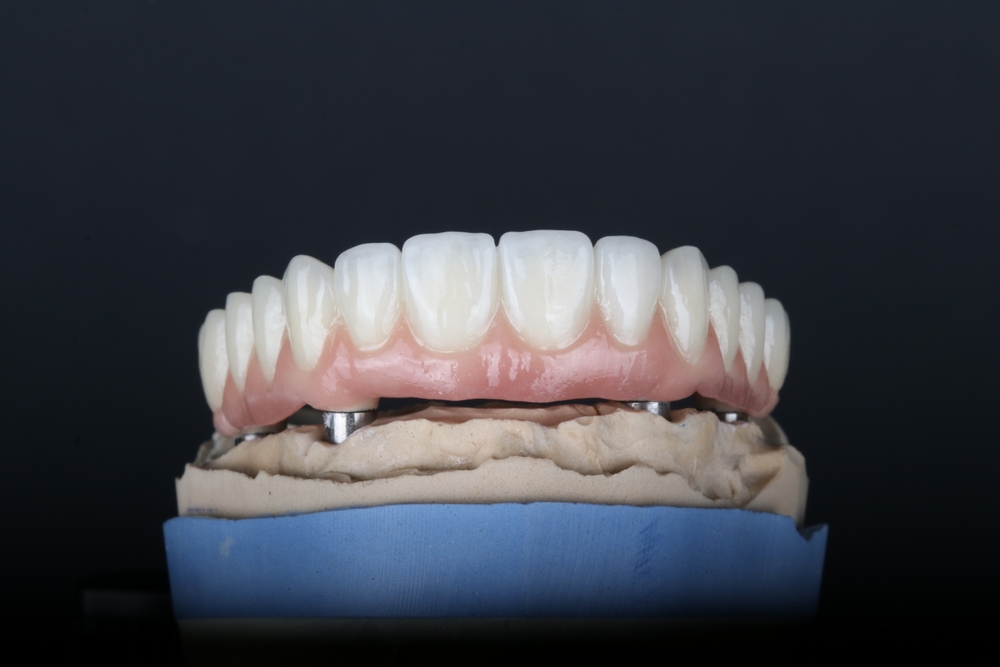
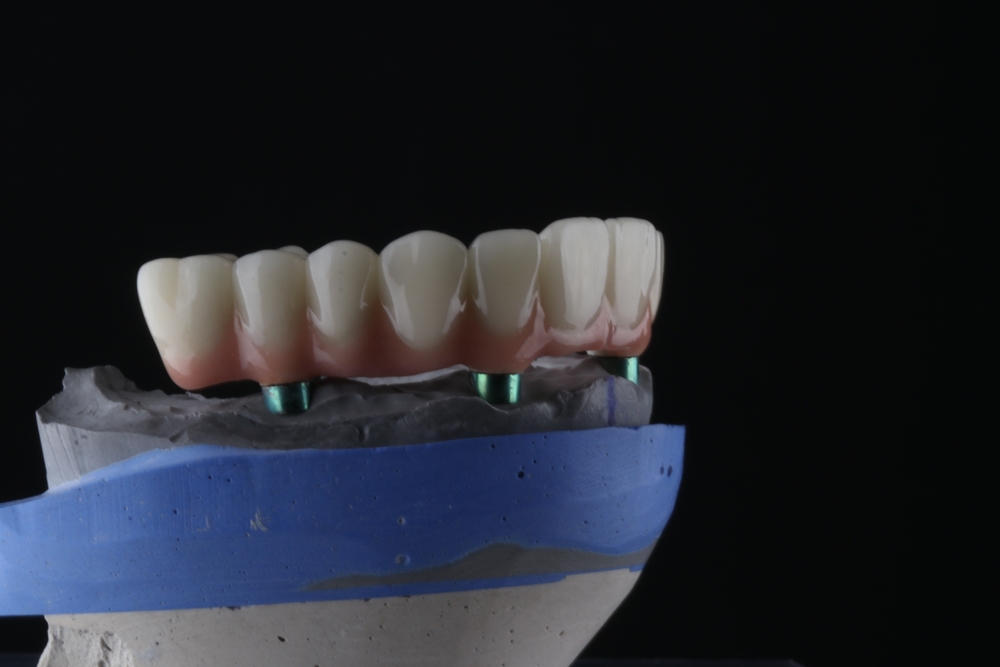
Implants anchor directly into the jawbone and do not move. The prosthetic arch attached to them functions much closer to natural teeth than any removable denture can.
Patients who make the switch consistently report being able to eat foods they had given up entirely. That restored freedom changes daily quality of life in ways that go beyond the mouth.
Research shows that complete denture wearers produce as little as 10% of natural bite force. Implant-supported restorations restore significantly more, which explains why patients can eat foods that dentures made impossible.
Explore Implant Options, Call Our Office Today to Book Your Consultation
Struggling with dentures does not have to be permanent. Our doctors at Southern Maryland Family & Prosthodontic Dentistry serve patients throughout St. Mary’s and Calvert County, MD, with implant solutions designed around your goals and bone structure.
Call us at 301-880-4439 today to speak with a member of our staff or request your evaluation online and get the personalized treatment plan you deserve.
Most patients researching full-arch surgery in Prince Frederick, MD, want to know the implant count before anything else. The answer depends on your bone density, bite force, and the protocol your provider recommends.
How many implants are typically used in full-arch surgery falls between four and six for most patients.
This post covers what drives that number, how protocols differ, and why individualized planning matters more than any fixed formula.
Why the Number of Implants Varies
Implant posts act as artificial tooth roots anchored directly into the jawbone. The full-arch prosthetic attaches to those posts and relies on them for all its stability.
Too few posts distribute chewing force unevenly and raise the risk of long-term failure. Too many add surgical complexity without meaningful structural benefit.
The goal is the minimum number needed to support the arch safely for decades. That number is different for every patient.
The All-on-4 Protocol
All-on-4 uses four implants per arch, two placed vertically in front and two angled in the back. The angled placement avoids sinuses and nerve canals without requiring bone grafting in many cases.
Four implants work well for patients with moderate bone density and average bite force. The protocol is efficient and reduces surgical time and recovery demands.
The trade-off is load distribution. With only four posts, each implant carries more individual stress during chewing.
How Many Implants Are Typically Used in Full-Arch Surgery With All-on-6 or All-on-X?
As the number suggests, for all-on-six, six implants spread chewing force more evenly across the full arch length. This reduces stress on each post and generally produces stronger long-term stability. All-on-X implants can have any number of implants used to make sure the smile is secure.
Patients with heavier bite force, grinding habits, or those wanting maximum durability tend to respond better to six implants. The wider foundation also supports a more robust prosthetic design.
Here’s the Deal: six well-placed implants outperform eight placed without precise planning. Provider skill and imaging matter as much as the number itself.
When More Than 6 Implants Are Needed
Patients with exceptionally strong bone or very high bite force occasionally benefit from seven or eight implants. This is less common but clinically appropriate in specific cases.
Patients with a history of implant failure may also qualify for a higher-implant protocol. Each additional post adds structural redundancy that reduces overall risk.
Your provider determines the count based on imaging and functional goals. It is never an arbitrary decision.
How Many Implants Are Typically Used in Full-Arch Surgery With Bone Loss?
Patients with significant bone loss present a more complex planning scenario. Reduced volume limits both implant placement and the number of posts the jaw can safely support.
Bone grafting restores adequate volume in many cases before surgery proceeds. Some patients with severe upper jaw bone loss qualify for zygomatic implants anchored in the cheekbone instead.
A 3D cone beam CT scan is the only accurate way to assess bone and plan placement precisely. That imaging drives every well-designed full-arch case.
What Your Consultation Will Determine
Your consultation includes imaging, a bite analysis, a medical history review, and a goals discussion. All of these inform the final implant count recommendation.
Smoking, uncontrolled diabetes, and certain medications affect osseointegration and may modify the protocol. These variables influence how conservatively the plan is designed.
The implant count is a structural decision that directly shapes how well your restoration functions and how long it lasts.
Full-Arch Surgery Near Prince Frederick, MD, Can Save Your Smile
A personalized consultation is the only reliable way to determine how many implants your arch requires.
Our doctors at Southern Maryland Family & Prosthodontic Dentistry serves patients in St. Mary’s and Calvert County in MD, with advanced full-arch planning and prosthodontic expertise.
Call us at 301-880-4439 today to speak with a member of our staff or request your evaluation online and get your personalized treatment plan that you’ll be proud of.
Candidacy for full-arch surgery in St. Mary’s County, MD, comes down to bone density, gum health, and overall medical status. Most healthy adults with significant tooth loss qualify with the right preparation.
Most patients who ask this question about candidacy assume the answer depends entirely on how many teeth they have left. The reality is more nuanced and more encouraging than that.
This post covers the key factors that determine candidacy for full-arch surgery, what can be done when barriers exist, and what to expect from a consultation.
What Full-Arch Surgery Actually Requires
Implant posts must integrate with living bone through a process called osseointegration. That means the jawbone needs adequate volume and density to receive and support the posts long-term.
Gums must be free of active infection before surgery proceeds. Periodontal disease left untreated creates a hostile environment that significantly raises implant failure risk.
Beyond the mouth, overall health matters. Patients need to be able to tolerate a surgical procedure and the healing period that follows over several months.
Who Is a Good Candidate for Full-Arch Surgery in St. Mary’s County, MD?
Adults with multiple missing teeth, failing teeth, or teeth beyond repair are the primary candidates. The extent of tooth loss matters less than the condition of the bone and gums beneath.
Patients who have worn dentures for years and are unhappy with the fit, stability, or dietary restrictions often find full-arch implants transformative. The switch from removable to fixed is one of the most impactful changes in modern dentistry.
Good general health, non-smoking status, and a commitment to long-term oral hygiene all strengthen candidacy. These habits directly influence how well implants integrate and how long they last.
Factors That Can Complicate Candidacy
Bone loss is the most common barrier, and it is not automatically disqualifying. Bone grafting restores volume in many patients and opens the door to implant placement after several months of healing.
Uncontrolled diabetes impairs bone healing and raises the risk of implant failure. Patients with well-managed diabetes, however, are generally good candidates with proper surgical planning.
Active smokers face higher failure rates due to reduced blood flow and slower healing. Cessation before surgery meaningfully improves outcomes and is strongly recommended.
What About Bone Loss From Years of Denture Wear?
Long-term denture wear accelerates the bone resorption that begins after tooth loss. Patients who have worn dentures for a decade or more often present with significant bone loss by the time they seek implants.
That does not rule out full-arch surgery in St. Mary’s County, MD, but it does require careful imaging and planning. A 3D cone beam CT scan maps existing bone precisely and reveals where grafting is needed.
Some patients with severe upper jaw bone loss qualify for zygomatic implants anchored in the cheekbone. This approach bypasses the need for extensive grafting in complex cases.
Medications and Health Conditions to Disclose
Bisphosphonate medications used to treat osteoporosis can affect bone healing and must be disclosed before any implant planning begins. Your provider will coordinate with your physician when these medications are involved.
Immunosuppressants, blood thinners, and certain antidepressants also affect healing timelines and surgical planning. A complete medication review is a standard part of every candidacy evaluation.
Conditions like heart disease and cancer history do not automatically disqualify patients. They require additional evaluation and coordination between providers before surgery proceeds.
What Your Consultation Will Cover
A candidacy evaluation includes 3D imaging, a full medical history review, a gum assessment, and a discussion of your goals and timeline. This visit gives both you and your provider a clear picture of what is possible.
Patients who are not immediately ready for implants leave with a roadmap showing exactly what preparation is needed. That might mean treating gum disease, completing a bone graft, or stabilizing a systemic condition first.
Find Out if You Qualify for Full-Arch Surgery, Call Our Top-Rated Providers Today to Book Your Consultation
A consultation is the only reliable way to know whether you are a candidate. Our doctors at Southern Maryland Family & Prosthodontic Dentistry serves patients throughout Leonardtown, MD, in St. Mary’s County, MD, with advanced prosthodontic planning and full-arch expertise.
Call us at 301-880-4439 today to speak with a member of our staff or request your evaluation online and get your personalized treatment plan that you’ll be proud of.
Missing and / or damaged teeth can affect your quality of life, from the foods you have to stop eating to your comfort level laughing with friends.
It’s exhausting and frustrating, not to mention the fact that it takes a toll on both your oral and overall health. Dental implants can give you a total teeth makeover.
If you’ve been considering options to reclaim your smile, All-on-X full arch surgery in Calvert County, Maryland, could be the life-changing solution you need to boost your confidence and your well-being.
All-on-X Replaces Your Entire Arch of Teeth in a Single Procedure
This is a permanent tooth replacement system that uses a strategic number of dental implants to support an entire arch of new teeth is the same as All-on-4 and All-on-6 but with a very real distinction.
The “X” stands for the number of implants placed, typically four or six, depending on what works best for your specific needs and anatomy.
Your new teeth are attached securely to these implants, so the result is a smile that feels, looks, and works exactly like healthy, natural teeth.
Choosing the Right Provider for Full Arch Surgery in Calvert County, Maryland Is Crucial
An investment into your quality of life, dental implants can drastically improve your health, comfort, and confidence, so you don’t want to choose just any provider.
You want to take your time to search for a practice where the dentists have extensive experience in full arch restoration, utilize advanced technology to ensure precise placement of your implants, and prioritize patient education, safety, and comfort.
A reputable provider will walk you through every step of the process during the consultation, a key part of having this procedure.
During this visit, they’ll let you know what your options are for smile restoration and create a customized treatment plan to reach your goals.
They’ll also help you set realistic expectations, and review pricing details with you including financing if available.
By choosing a quality provider, you can be sure they’ll help you support your oral health long after your final results are in place.
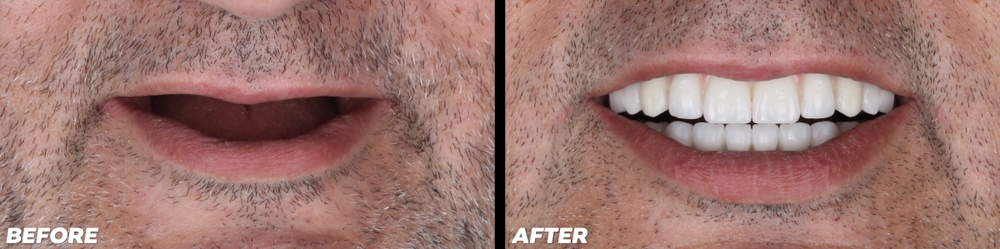
You’ll Be Amazed at the Results You Can Expect
Your results from All-on-X full arch surgery in Calvert County, Maryland are truly going to be transformational. After your procedures and healing, you’ll enjoy benefits such as:
- A complete set of beautiful, natural-looking and functioning teeth
- The ability to chew comfortably again, allowing you to enjoy any foods
- Clearer speech
- Your facial structure being preserved by the implants
- Teeth that don’t shift, slip, or require special cleaning or nightly removal, unlike dentures
- Renewed confidence, especially in social and professional situations
- Long-lasting results
Implants are considered permanent, but they may eventually need to be replaced.
Insurance Coverage Varies, and Financing Makes It Fit Into Most Budgets
Dental insurance often covers a portion of certain components of All-on-X, such as extractions and temporary restorations.
However, full coverage of the procedure for the implants themselves is not likely.
Your dental care team will be sure you understand your coverage and help you explore financing options like CareCredit that turn your total investment into low monthly payments.
The Downsides of All-on-X Are Pretty Minimal
Let’s get the real downsides out of the way first.
You’ll need to commit to a healing period after surgery, follow aftercare instructions carefully, and maintain consistent oral hygiene to protect your investment. That’s pretty much it.
Other downsides?
You won’t be able to stop smiling, taking pictures, or telling everyone how amazing it feels to eat steak again!
Improve Your Smile, Speech, and Confidence With Full-Arch Dental Implants From Southern Maryland’s Top Prosthodontic Team
Your smile transformation is just a phone call away to our team!
Father-and-son team Drs. Joseph T. Luke and Jonathan T. Luke both have the experience and precision that exceptional full arch results require.
Call our team at 301-880-4439 today to speak with a member of our staff or request your evaluation online and find out for yourself the benefits of All-on-X full arch restoration.
There are a lot of challenges that arise from having missing and / or poorly functioning teeth. The good news is that full arch restoration in Calvert County, MD offers a life-changing solution!
Advanced technology now makes it possible to completely rebuild your smile with results that look and feel more natural than ever before through options such as implants.
What is a Full Arch Restoration in Calvert County, MD?
A full arch refers to all the teeth on either your upper or lower jaw.
When many, or even all, teeth in an arch are missing, damaged, or beyond repair, a full arch restoration in Calvert County, MD, replaces them.
It can be done with either a permanent or removable solution, or a combination of the two, restoring function and your smile.
This approach is dramatically more effective than replacing teeth one at a time when extensive damage or loss is present.
What Are Your Top Options for a Full Arch Restoration?
You have some options available, each with its own unique benefits.
Common options include:
- Fixed implant-supported restorations, such as All-on-X and All-on-4 or All-on-6, where a full set of replacement teeth is anchored to four or six strategically placed dental implants
- Removable overdentures, which snap onto remaining teeth or implants for stability but are still able to be removed
- Hybrid dentures, which give you the security of fixed implants but are only removable by a dentist
- Traditional dentures, the most affordable option but not necessarily the best for long-term oral health
Your dentist will let you know which of these aligns best with your needs after a thorough evaluation, which will depend on your anatomy, goals, and other individual factors.
There Are Specific Benefits for Each Type, But There Are Drawbacks to Each Type of Full Arch Restoration in Calvert County, MD to Consider Too
Each restoration approach offers distinct advantages.
Fixed implant-supported options like All-on-4 provide an incredibly stable, permanent solution that functions much like natural teeth.
They never need to be removed and require minimal special care beyond regular brushing. However, fixed implant-supported restorations require a larger initial investment and a longer process to complete.
They also require a certain amount of jawbone density to support the implants properly. If you don’t have it, you’d need a bone graft, which is an additional expense.
Removable overdentures are easier to clean thoroughly and can be more cost-effective in some cases. They offer significantly better stability than traditional dentures due to the permanent implant.
The overdentures need to be taken out daily for cleaning, which some patients find inconvenient. They may also feel less stable than fully fixed solutions.
Hybrid prostheses give you the best of both worlds, combining the security of implants with adjustability when needed for maintenance or repairs.
Hybrid options have the drawbacks of both of the above types.
Dentures don’t require oral surgery, as do the three other options, and it’s the most cost-effective treatment upfront.
However, they’re not as comfortable as other options, and they don’t prevent jawbone deterioration. Plus, they will need to be replaced, whether from damage, loss, or simply regular usage.
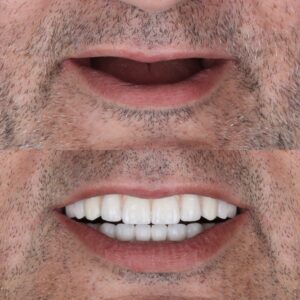 Here’s Why Addressing Missing Teeth Is Crucial
The benefits of restoring your full arch reach far beyond aesthetics, though the quality of your smile is very important too.
Other things are affected from tooth loss, such as:
- Difficulty eating, leading to nutritional deficiencies too
- Changes in speech patterns and pronunciation
- Bone loss in the jaw, which may lead to loss of facial structure
- Reduced self-confidence, which may cause a reluctance to smile or socialize
- Increased risk of other oral health complications
Restoring teeth, especially if you do so with permanent implants, addresses most if not all of these concerns.
It improves your ability to enjoy meals, speak clearly, smile confidently, and maintain a healthy facial structure.
How Much Does It Cost?
The truth is that pricing varies depending on the type of restoration you choose.
During your consultation, you’ll receive a detailed breakdown of all costs and available payment options.
Financing options through programs like CareCredit make it more accessible if you qualify.
When weighed against the long-term benefits, the investment is well worth it compared to ongoing dental issues, repairs, and replacements.
How Long Does Recovery Take?
This, like the costs, depends on the specific procedure(s) you need for complete restoration of an arch.
Initial healing after implant placement typically takes a few days to a week for the surgical sites to feel better.
The full integration of implants with your jawbone takes several months, during which you’ll likely wear a temporary restoration.
Your final permanent teeth are attached once healing is complete.
There’s no downtime or recovery period needed for dentures, unless you’ve had to have teeth pulled in order to get them. Healing from tooth removal, whether for implants or dentures, can take one to two weeks.
Are There Risks to Consider?
Like any dental procedure, full arch restoration in Calvert County, MD, carries some potential risks.
Possible complications include infection, implant failure, and nerve sensitivity, as well as sinus issues if you’re getting implants in your upper arch.
However, these complications are uncommon when the procedure is performed by an experienced provider using modern techniques and proper safety protocol.
The Bottom Line on Choosing Full Arch Restoration in Calvert County It’s a Transformative Solution for Tooth Loss
Restored function leads to improved oral health and a renewed confidence in yourself that really can’t be overstated.
Even if you’re not sure whether you’re ready to commit, scheduling a consultation is a great first step.
This visit will give you the information and clarity to make the best decision for your unique situation.
Smile Confidently Like Never Before After Dental Restoration at the Practice of Drs. Joseph T. Luke and Jonathan T. Luke
For the expertise, advanced technology, and personalized care that exceptional results require, you need the expertise of one of Southern Maryland’s top dentists, which you’ll find here!
Don’t just take our word for it! Check out our before-and-after smile gallery, and you’ll see more people trust us for all their dental needs.
Call us at 301-880-4439 today to speak with a member of our staff or request your evaluation online and find out how you can have a healthier, more beautiful smile with full arch restoration in Calvert County, MD!
Do you hide your smile in photos? Do you avoid certain foods because of missing or damaged teeth?
If so, implants are a life-changing solution. But like most people, you’re probably wondering how much they cost.
Check out our expert guide to affordable dental implants in Southern Maryland so that you can restore your smile and your confidence.
What Are Dental Implants?
Implants are used to replace severely damaged or missing teeth. Unlike dentures that sit on top of the gums, implants are surgically placed into the jawbone.
A crown is then attached on top to create a natural-looking, fully functional tooth.
Over time, implants fuse with the jawbone, making them incredibly stable. This means no worrying about clicking, slipping, or having to remove them at night.
They look, feel, and function just like real teeth.
Implants are also very versatile and can be used to address many different dental concerns, including:
- Replacing missing teeth
- Supporting bridges
- Stabilizing dentures
- Preventing bone loss
What Are the Benefits of Affordable Dental Implants in Southern Maryland?
One of the biggest reasons people choose implants is because of how natural they feel. Once healed, most patients forget they even have them.
With dental implants you’re able to speak clearly, eat all of your favorite foods, and smile freely without worrying about discomfort or movement.
Another perk is durability. With proper care, implants can last decades, which is much longer than other tooth replacement options. This makes them a smart, long-term investment.
They’re also low maintenance. You can brush and floss them like natural teeth, without the need for soaking solutions or special adhesives.
Most importantly, they provide a huge confident boost. Having a complete, healthy smile can improve every aspect of your life.
How Much Do Dental Implants Cost?
The cost of implants depends on your specific needs. A single implant can cost anywhere from $3,000 to $6,000 or more. If you require additional procedures like extractions, bone grafting, or sinus lifts, the cost will be higher.
Full mouth implants can range from $15,000 to $50,000 or more.
Though this is a step number, it’s important to look at the bigger picture and understand that this is a lasting investment.
Unlike dentures or bridges that often need to be replaced every few years, implants are designed to last. In fact, over time, they can be more cost effective.
Top Tips to Find Affordable Dental Implants in Southern Maryland
Restoring your smile doesn’t have to break the bank. Here are some smart ways to find affordable dental implants in Southern Maryland.
- Check your insurance coverage. While not all insurance plans cover implants, some may pay a portion of the procedure, such as extraction or crown placement. It’s always worth checking your benefits to reduce your out-of-pocket cost.
- Shop around. Prices vary between dental practices, so you’ll want to get a few consultations. But when shopping around, make sure you’re comparing more than just cost. Experience and reputation are vital.
- Ask about payment plans. Many offices offer financing options that let you spread payments out over time. This can make a huge difference if you have a set budget and want affordable monthly payments.
- Consider phased treatment. If you need multiple implants, ask about spacing out treatment over time. This can help manage costs without delaying care entirely.
Though it can be tempting to go with the lowest price you find, cheaper isn’t always better.
Implants are a surgical procedure. Treatment requires skill, precision, and high quality materials.
Cutting corners can increase the risk of complications like infection, implant failure, and poor results. Fixing these issues later on often costs much more than doing it right the first time.
Instead of focusing on price alone, choose a provider who has plenty of experience, strong credentials, and plenty of positive patient reviews.
Restore Your Smile and Happiness With Affordable Dental Implants in Southern Maryland
Tooth loss or damage don’t have to be your reality. With dental implants, you can get back to smiling confidently and without hesitation.
For affordable prices and a comfortable experience, come to Southern Maryland Family & Prosthodontic Dentistry. Request an appointment online or give our office a call today at 301-880-4439.
When you’re missing a tooth, the impact goes far beyond aesthetics. Chewing becomes harder, surrounding teeth shift, and long-term oral health can be compromised.
Fortunately, modern dentistry offers two highly effective solutions that lead most people to compare: dental implants vs dental bridges. But how do you know which option is the best fit for your needs?
Understanding the differences, benefits, and considerations for each can help you make a confident, informed decision about your smile and long-term dental health.
What Are Dental Implants?
Dental implants are considered the gold standard for tooth replacement. An implant is a titanium post surgically placed into the jawbone, acting as an artificial tooth root. Once healed, a custom crown is attached, creating a strong, natural-looking replacement.
Why Patients Choose Implants
- They look and feel natural. Implants blend seamlessly with your real teeth and function just like them.
- They prevent bone loss. Because implants integrate with the jawbone, they help maintain bone density and facial structure.
- They’re incredibly durable. With proper care, implants can last decades—often a lifetime.
- They don’t involve neighboring teeth. No need to alter healthy teeth to support the restoration.
Who is a Good Candidate?
Dental implants work best for patients with healthy gums and adequate jawbone density. If bone loss has occurred, bone grafting may be required before placement.
What Are Dental Bridges?
Dental bridges replace one or more missing teeth by anchoring an artificial tooth (or teeth) to the natural teeth on each side of the gap. These supporting teeth are reshaped and fitted with crowns, which hold the bridge securely in place.
Why Patients Choose Bridges
- They restore your smile quickly. Unlike implants, bridges require no healing period.
- They’re cost-effective. Bridges tend to be less expensive upfront than implants.
- They are ideal when bone loss is present. Bridges don’t rely on the jawbone for support.
Who is a good candidate? Bridges are an excellent choice for those who prefer a quicker, non-surgical restoration or who may not be eligible for implants due to health or bone density concerns.
Dental Implants vs Dental Bridges: 5 Key Differences
Understanding how these two options compare is vital when choosing the right treatment.
1. Longevity
- Implants: Can last a lifetime with good oral hygiene.
- Bridges: Typically last 10 to 15 years before replacement may be needed.
2. Impact on Surrounding Teeth
- Implants: Do not affect neighboring teeth.
- Bridges: Require supporting teeth to be reshaped and crowned.
3. Jawbone Health
- Implants: Stimulate the jawbone and prevent bone loss.
- Bridges: Do not prevent bone deterioration beneath the missing tooth.
4. Treatment Time
- Implants: Require multiple appointments and a healing period (3–6 months).
- Bridges: Can usually be completed in just a few weeks.
5. Cost
- Implants: Higher initial investment but longer-lasting.
- Bridges: Lower upfront cost but may need replacing sooner.
Dental Implants vs Dental Bridges: How to Decide Which Option Is Right for You
Choosing between dental implants and bridges depends on several factors, including your oral health, timeline, budget, and personal preferences.
You may be a better candidate for dental implants if you:
- Want a long-term or permanent solution
- Prefer the most natural look and feel
- Have sufficient jawbone density
- Want to preserve the health of nearby teeth
You may be a better candidate for a dental bridge if you:
- Want a faster, non-surgical option
- Prefer a lower upfront cost
- Have neighboring teeth that already need crowns
- Are not a candidate for implant surgery
During a consultation, your dentist will evaluate your oral health, review your goals, and help you determine the best approach to restore your smile.
Restore Your Smile With the Right Tooth Replacement Option
Both dental implants and dental bridges offer effective, life-changing results – what matters most is choosing the option that supports your long-term health and confidence.
If you’re unsure which treatment is right for you, our team of highly qualified doctors is here to help. We’ll guide you through the pros, cons, and personalized recommendations based on your unique needs.
Ready to explore your options? Call 301-880-4439 or request your consultation online and take the first step toward a stronger, healthier, and more confident smile.