What a Bone Graft in Calvert County Fixes for Patients
Lose a back tooth and the gap in your smile is only half the story. Below the gumline, the bone that once held that root starts thinning within weeks.
The jawbone stays full only when chewing pressure reaches it, and an empty socket gets none. That is why people who wait years to ask about dental implants often hear they need more bone first.
A bone graft in Calvert County restores that missing support so a titanium post has solid ground to fuse with. Think of a fence post, which only stands straight in firmly packed soil.
So can you still get an implant with a thin jaw? In many cases, yes, once grafting rebuilds enough height and width to hold it.
Why Your Jawbone Shrinks After a Tooth Is Gone
Your jaw constantly reshapes itself based on the forces it handles every day. When a root disappears, the body treats that stretch of ridge as unused and slowly breaks it down.
Most shrinkage happens in the first few months after an extraction, then slows for years. Traditional dentures can speed this up by pressing on the ridge without stimulating it.
Eventually the ridge may become too narrow or too short to anchor anything securely. A sunken look around the lips and cheeks is often the first outward sign.
What a Bone Graft in Calvert County Rebuilds
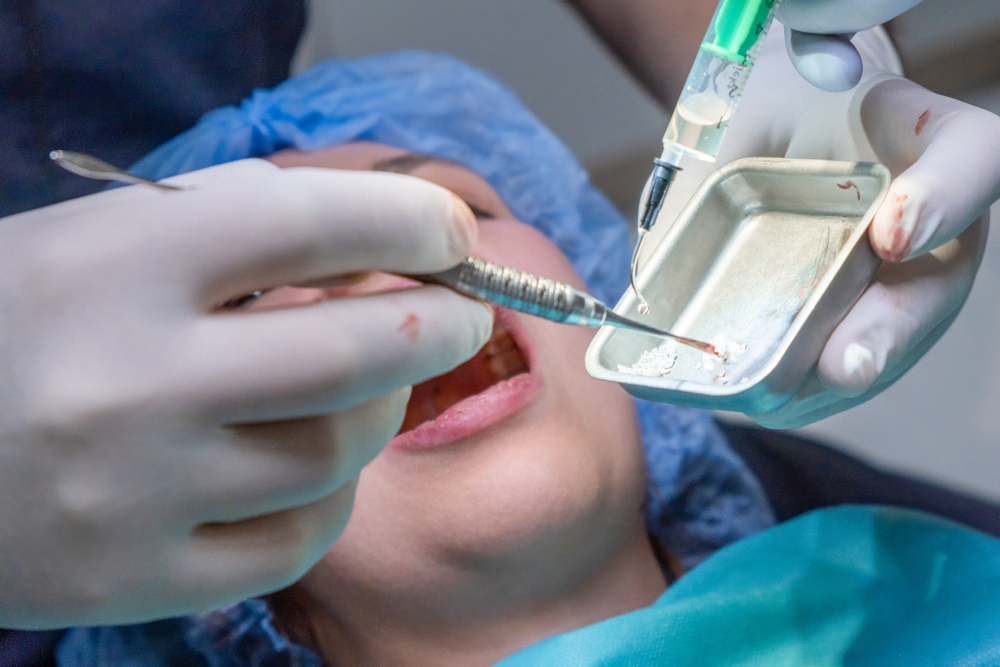
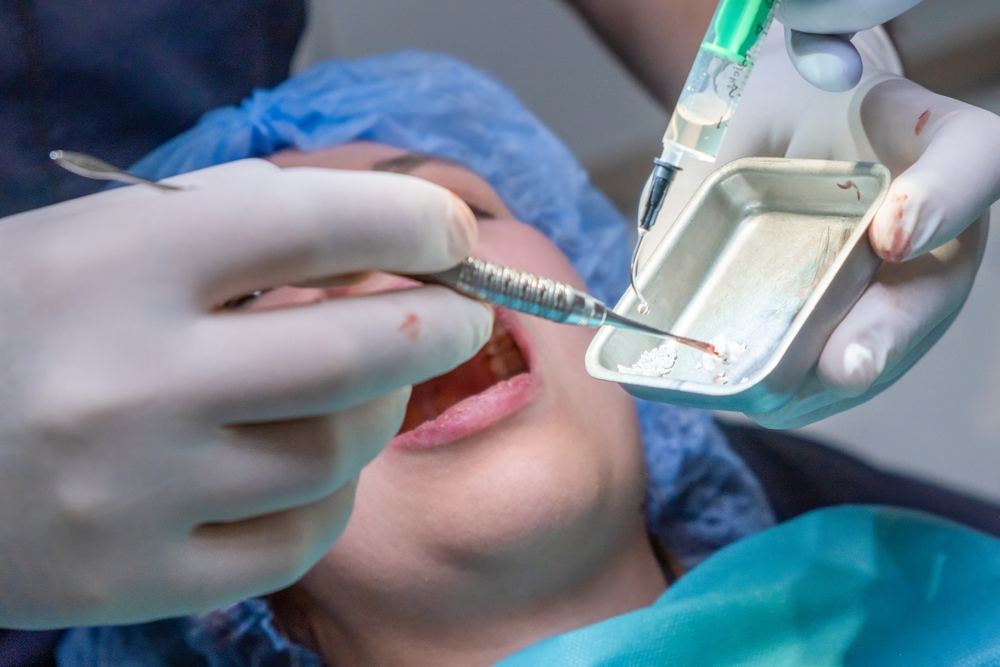
Grafting is not one single surgery. Your dentist chooses an approach based on where support is missing and how much has disappeared:
- Socket preservation. Fills an empty socket right after a tooth comes out to limit collapse.
- Ridge augmentation. Adds width or height to a jaw that has already thinned.
- Sinus lift. Raises the sinus floor in the upper back jaw to make room for a post.
- Periodontal graft. Replaces tissue lost to advanced gum disease.
Each option gives the new root enough density to bond with the jaw through a process called osseointegration. Without that bond, even a perfectly placed post can loosen over time.
Four Graft Materials and How Each One Works
Graft material acts as a scaffold that your own tissue gradually grows into and replaces. An autograft uses bone from elsewhere in your body, while an allograft comes from processed donor tissue.
A xenograft is sourced from animals, most often cows, and an alloplast is synthetic, such as calcium phosphate. Each suits different defect sizes and healing timelines.
Your health history and personal preferences also play a role in the final choice. Many patients feel more comfortable once they understand exactly what is going into their jaw and why.
Signs Your Jaw Needs Support Before Implants
You cannot spot ridge loss in the mirror, but a few clues hint at it. A tooth missing for years, dentures that keep slipping, or a history of gum disease all raise the odds.
Patients considering a bone graft in Calvert County usually start with 3D imaging rather than a standard X-ray alone. A cone beam CT scan reveals the exact height, width, and density where a post would go.
How Long Healing Takes Before Your New Tooth
Grafted areas do not harden overnight. Healing often takes several months before placement, though small socket grafts tend to mature faster than larger ones.
Ridge augmentations and sinus lifts can need extra time to fill in completely. Smoking, uncontrolled diabetes, and certain medications may also slow the process down.
In some cases, the graft and the post go in during the same visit when the site is stable enough. Results vary from person to person, so your timeline depends on how your body responds.
Planning Your Bone Graft in Calvert County Around the Final Smile
Dr. Joseph T. Luke and Dr. Johnathan Luke are prosthodontists, specialists with three additional years of training in replacing missing teeth. That background changes how grafting gets planned from the very first visit.
Instead of adding volume and hoping for the best, a prosthodontist starts with the finished teeth and works backward. The graft goes exactly where the post needs to sit for a natural bite and appearance.
Ready to Rebuild Your Foundation? Request Your Lusby Consultation
Every month a gap sits empty, the ridge beneath it has a little less to offer. An early evaluation shows whether you need grafting at all or can move straight to replacing the tooth.
Book online or call 301-880-4439 to reserve your visit with Dr. Joseph or Johnathan Luke.