Most people picture weeks without any teeth after full arch surgery. That is not actually how the process works anymore, and knowing what really happens changes how people commit to and prepare for treatment.
The direct answer for how long it actually takes to recover from full arch surgery in MD: the surgical day itself takes a few hours, and most patients leave with a temporary fixed set of teeth the same day.
Full comfort typically returns within two to four weeks, while the underlying bone continues healing for several months in the background.
What Actually Happens the Day of Full Arch Surgery
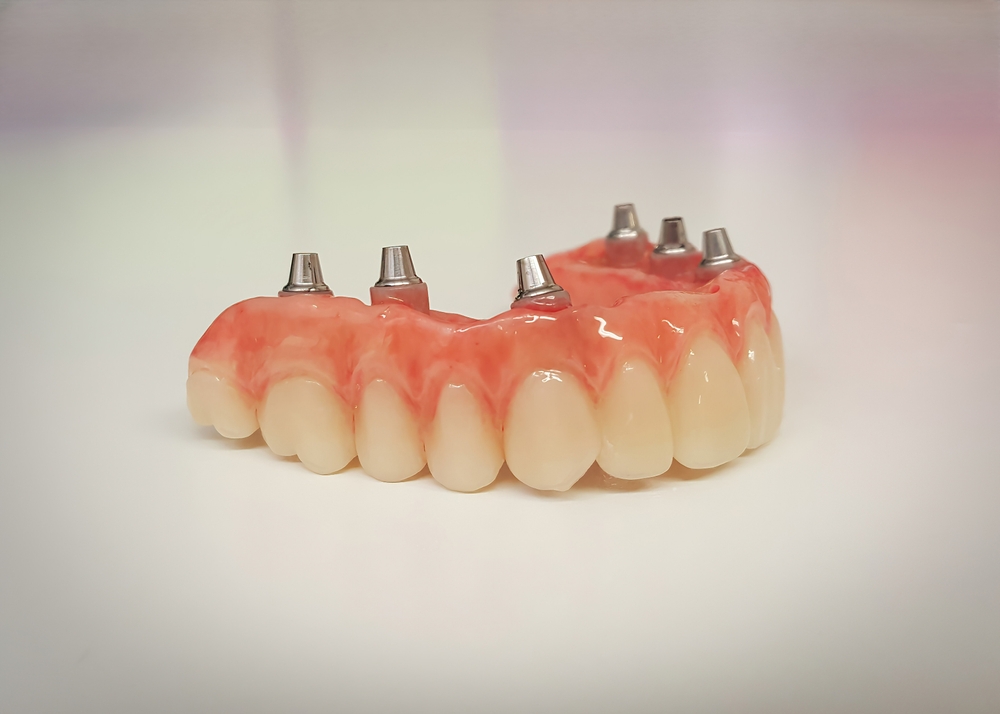
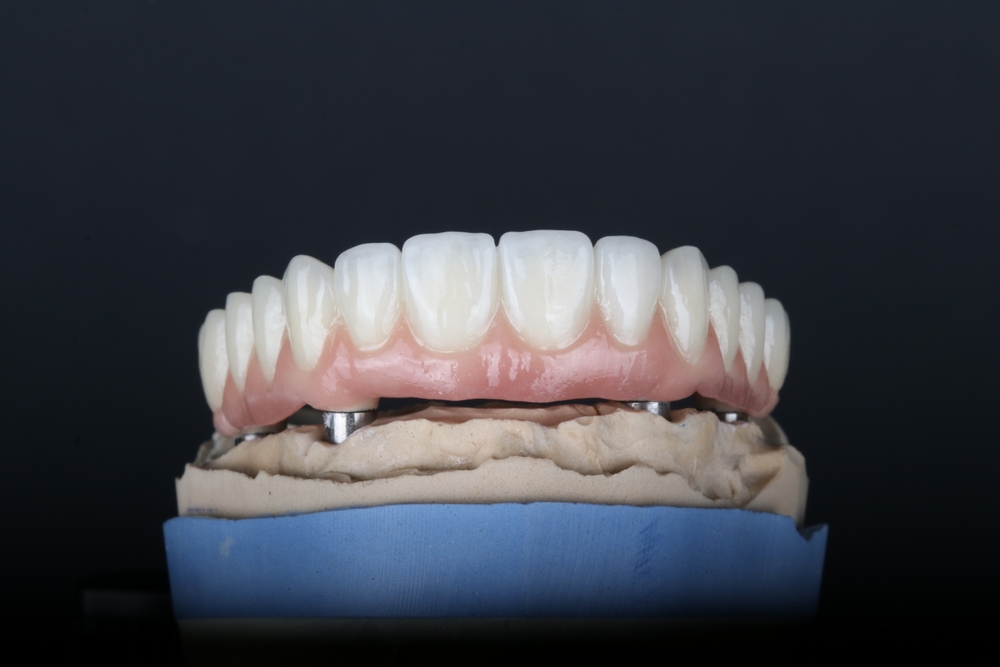
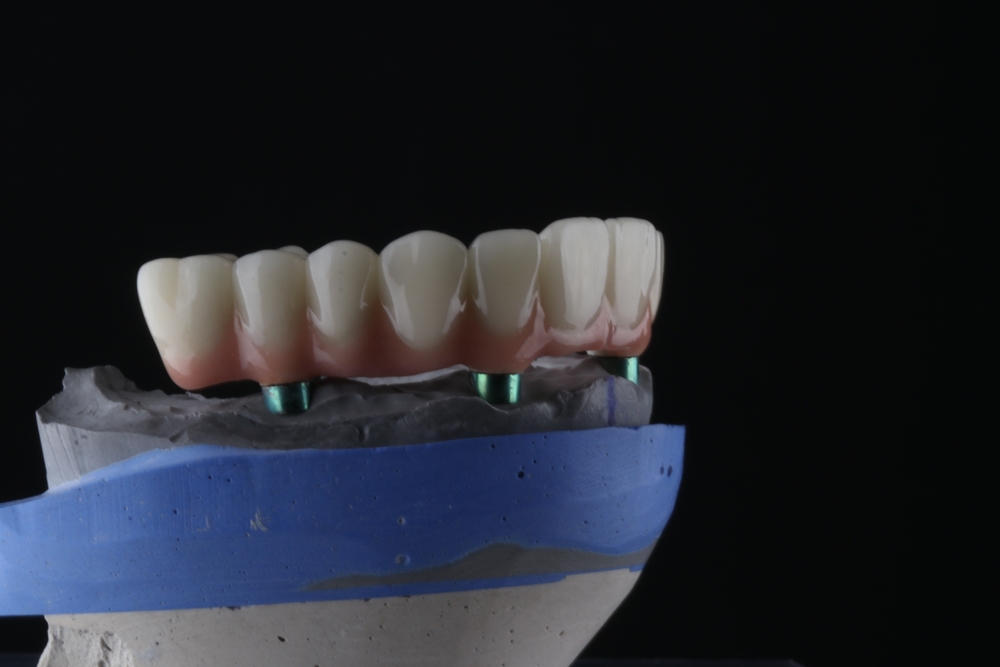
Most patients receive IV sedation or, in some cases, general anesthesia, so very little is felt during the procedure itself. Any remaining teeth are removed, implants are placed into the jawbone, and a temporary fixed prosthesis is typically attached before you leave the office.
That last detail surprises a lot of first time patients. Dr. Luke’s patients go home the same day with functional, non-removable teeth rather than an empty mouth or a removable denture.
Some cases only require local anesthesia with oral sedation, while more extensive cases involving multiple extractions and implant placement often call for IV sedation to keep the patient comfortable throughout a longer appointment.
Because of the sedation involved, arranging a ride home and having someone stay with you for the first 24 hours is essential. Most patients feel groggy and tired that evening rather than in significant pain.
The First 48 Hours After Full Arch Surgery in MD
Swelling, bruising, and general discomfort peak during the first two days.
Ice packs applied in 20 minute intervals help manage swelling more effectively than most people expect, and sleeping with your head elevated the first night or two also reduces morning puffiness.
Prescribed pain medication typically keeps discomfort manageable during this window.
A strict liquid or soft food diet is necessary from the start, since the temporary prosthesis needs to stay undisturbed while healing begins.
What to Expect in Weeks Two Through Four of Full Arch Surgery in MD Recovery
By the end of the first week, most patients notice swelling and soreness beginning to fade. Soft foods like eggs, well cooked vegetables, and ground meats are usually cleared around week two, though guidelines vary depending on how many implants were placed.
Some patients initially feel like the temporary teeth sit slightly loose. This sensation typically resolves on its own as swelling goes down and tissue heals around week two or three.
By week four, most patients describe feeling largely back to normal. Swelling is gone, pain is minimal, and the temporary teeth feel stable and comfortable.
Why Full Bone Healing Still Takes Months Longer
The visible recovery, feeling comfortable and eating normally, happens well before the implants are fully fused to the bone.
Osseointegration continues in the background for three to six months, which is why the final permanent prosthesis is not placed until that process is confirmed complete.
Returning to Work and Daily Activities
Many patients return to desk work within a few days to a week, though physically demanding jobs may require additional time off.
Our experienced providers tailor this guidance to each patient’s specific procedure and job requirements during the consultation.
Factors That Affect How You Recover From Full Arch Surgery in MD
The number of implants placed, whether extractions were needed at the same appointment, and your overall health all influence how quickly you move through each recovery stage.
Patients in good general health with strong bone density often progress through the visible recovery milestones faster than those requiring additional procedures like bone grafting at the same time.
Following post-operative instructions closely, including diet restrictions and any prescribed medication, remains the single biggest factor within your control for a smooth recovery.
Talk to Our Team About Full Arch Surgery in MD Today
To find out what your specific recovery timeline would look like, call our team directly at 301-880-4439 or request your appointment online now.
At Southern Maryland Family and Prosthodontic Dentistry, Dr. Joesph Luke and his son Dr. Jonathan Luke have been providing excellent care to patients in St. Mary’s County and Calvert County since the mid-1990s and are looking forward to helping you fall in love with your smile again.
Full arch implant procedures give patients missing most or all of the teeth in one arch a permanent option. Choosing between All-on-4 or All-on-6 usually comes down to available bone and long-term goals rather than personal preference.
Both use titanium implants to support a full arch of teeth with a fixed prosthesis. The number in each name reflects how many implants anchor the arch.
How All-on-4 or All-on-6 Actually Differ
All-on-4 places two front implants straight down to maximize use of available bone, with two back implants angled to avoid the sinus and nerve structures.
This configuration works well even with limited bone volume, often avoiding the extensive grafting other approaches require.
All-on-6 adds two more implants, generally spaced further apart across the arch. These extra implants act as a safety net, distributing chewing force over a larger area and providing backup if one implant does not fully integrate.
Why All-on-6 Requires More Detailed Imaging
Because the implants sit further apart in an All-on-6 case, planning requires more detailed imaging of nerves, sinuses, and bone density to place each one accurately.
A CT scan is standard for both procedures, but the spacing planning for All-on-6 tends to be more involved, since each implant needs enough distance from the others.
This ensures the bite force distributes evenly across the arch without interfering with adjacent implant sites.
Why Implant Count Actually Matters Long Term
A widely known principle sums up the tradeoff: All-on-4, but none-on-3. If one implant fails in a four-implant arch, the remaining three generally cannot safely support a fixed prosthesis on their own.
Research on implant-supported restorations has found that adequate bone volume matters more than implant count alone.
Patients with heavy grinding habits or a particularly strong bite are often steered toward All-on-6, since spreading the load across more implants reduces the risk of failure.
What a Consultation Actually Determines
A review of your dental history, medical history, and a full oral exam determines whether there is enough bone for All-on-4 without grafting, or whether All-on-6 would distribute forces more safely across your arch.
An oral surgeon and prosthodontist typically evaluate candidates together, weighing dental history, overall health, and treatment goals.
With bone grafting available beforehand when needed, most patients can ultimately be prepared for either option.
The consultation also covers realistic expectations, since both approaches work best for patients with straightforward healing profiles rather than complex medical histories.
All-on-4 vs. All-on-6 Cost Differences
All-on-4 is typically less expensive than All-on-6, since fewer implants are involved.
Surgical time runs a bit longer for All-on-6, but that difference shows up in the appointment itself rather than the overall price gap, which mainly comes down to implant count.
Healing Time and What the Final Restoration Looks Like
Overall healing and rehabilitation time is about the same for both procedures, with most patients receiving permanent teeth within three to six months.
The final restoration itself is typically a fixed bridge made from zirconia or an acrylic and titanium hybrid, chosen based on durability needs and aesthetic goals.
Both All-on-4 and All-on-6 patients go through the same general sequence: temporary teeth placed the day of surgery, followed by the permanent restoration once healing is confirmed complete.
Making the Right Choice Between All-on-4 or All-on-6
All-on-4 tends to work well when there is strong bone density at the front of the jaw and the case is straightforward.
All-on-6 tends to make more sense for heavier bite forces or when added redundancy is worth a slightly more involved surgery.
Talk to a Prosthodontist About All-on-4 or All-on-6 Options, Call Our Team Today to Request an Appointment
To find out which option fits your jaw structure and goals, call our team directly at 301-880-4439 or request your appointment online now!
The benefits of full-arch surgery compared with traditional dentures go well beyond aesthetics. The differences affect bone health, daily function, and quality of life in ways most patients do not expect.
While traditional dentures have helped people function for generations, but the limitations compound over time. Slipping, adhesives, bone loss, and restricted diets are not minor inconveniences.
This post covers what sets full-arch implant surgery apart, where dentures fall short, and how to know which path fits your situation.
What Full-Arch Surgery Actually Does
Full-arch surgery replaces an entire arch of missing teeth using implant posts anchored into the jawbone. The restored arch attaches to those posts and functions like natural teeth.
The posts replace the function of natural tooth roots. They stimulate the jawbone during chewing, which prevents the bone loss that begins after teeth are removed.
Dentures sit on top of the gum tissue and provide no stimulation to the bone beneath. That structural difference drives most of the long-term outcomes that separate the two options.
The Benefits of Full-Arch Surgery Compared With Traditional Dentures for Bone Health
Jawbone resorption begins within weeks of tooth loss and accelerates with years of denture wear. The face gradually takes on a sunken appearance as bone that once supported teeth diminishes.
Full-arch implants halt that process entirely. The posts integrate with the bone through osseointegration, giving the jaw the stimulation it needs to maintain density.
Patients who wait often require bone grafting before implants become viable. This is one of the strongest arguments for acting before significant loss occurs.
Chewing Force and Daily Function
Patients researching the benefits of full-arch surgery compared with traditional dentures are often most surprised by the difference in chewing force. Dentures restore roughly 25% of normal biting ability.
Full-arch implants restore approximately 90% of natural chewing force. Steak, raw vegetables, and foods that dentures make difficult or impossible become accessible again.
The nutritional impact of restricted chewing is real and cumulative. Patients who cannot chew effectively tend toward softer, processed foods that affect overall health over time.
What Are the Benefits of Full-Arch Surgery Compared With Traditional Dentures for Maintenance?
Dentures require daily removal, overnight soaking, adhesives, and periodic relining. The fit changes as bone resorbs, and full replacement is typically needed every five to eight years.
Full-arch implants are maintained like natural teeth. Brushing, water flossing, and twice-yearly professional cleanings are all that most patients require.
The cumulative cost of adhesives, relining, and replacement narrows the investment gap between dentures and implants significantly over a decade.
Comfort and Confidence in Daily Life
Denture wearers frequently describe anxiety about slippage during meals or conversation. That social burden affects confidence in ways that extend well beyond the mouth.
Full-arch restorations are fixed in place. Patients speak, eat, and laugh without thinking about their teeth, which is exactly what most people want from tooth replacement.
Patients who transition from dentures to implants consistently describe the change as life-altering. Function, confidence, and daily ease all shift dramatically after the switch.
Who Should Consider Making the Switch
Patients struggling with loose dentures, restricted diets, or bone loss concerns are the strongest candidates.
A consultation and imaging assessment determine whether bone density is sufficient for implants.
Patients with existing bone loss may need grafting first. Most healthy adults without uncontrolled systemic disease are candidates with the right preparation.
Your provider will assess your anatomy, health history, and goals before recommending a treatment path.
Explore Options for Full-Arch Surgery Near Calvert County at Southern Maryland Family & Prosthodontic Dentistry
A consultation is the clearest way to understand which option is right for your specific situation.
Our doctors at Southern Maryland Family & Prosthodontic Dentistry serves patients throughout St. Mary’s and Calvert County, MD.
Call us at 301-880-4439 today to speak with a member of our staff or request your evaluation online and get your personalized treatment plan that you’ll be proud of.
Most patients researching full-arch surgery in Prince Frederick, MD, want to know the implant count before anything else. The answer depends on your bone density, bite force, and the protocol your provider recommends.
How many implants are typically used in full-arch surgery falls between four and six for most patients.
This post covers what drives that number, how protocols differ, and why individualized planning matters more than any fixed formula.
Why the Number of Implants Varies
Implant posts act as artificial tooth roots anchored directly into the jawbone. The full-arch prosthetic attaches to those posts and relies on them for all its stability.
Too few posts distribute chewing force unevenly and raise the risk of long-term failure. Too many add surgical complexity without meaningful structural benefit.
The goal is the minimum number needed to support the arch safely for decades. That number is different for every patient.
The All-on-4 Protocol
All-on-4 uses four implants per arch, two placed vertically in front and two angled in the back. The angled placement avoids sinuses and nerve canals without requiring bone grafting in many cases.
Four implants work well for patients with moderate bone density and average bite force. The protocol is efficient and reduces surgical time and recovery demands.
The trade-off is load distribution. With only four posts, each implant carries more individual stress during chewing.
How Many Implants Are Typically Used in Full-Arch Surgery With All-on-6 or All-on-X?
As the number suggests, for all-on-six, six implants spread chewing force more evenly across the full arch length. This reduces stress on each post and generally produces stronger long-term stability. All-on-X implants can have any number of implants used to make sure the smile is secure.
Patients with heavier bite force, grinding habits, or those wanting maximum durability tend to respond better to six implants. The wider foundation also supports a more robust prosthetic design.
Here’s the Deal: six well-placed implants outperform eight placed without precise planning. Provider skill and imaging matter as much as the number itself.
When More Than 6 Implants Are Needed
Patients with exceptionally strong bone or very high bite force occasionally benefit from seven or eight implants. This is less common but clinically appropriate in specific cases.
Patients with a history of implant failure may also qualify for a higher-implant protocol. Each additional post adds structural redundancy that reduces overall risk.
Your provider determines the count based on imaging and functional goals. It is never an arbitrary decision.
How Many Implants Are Typically Used in Full-Arch Surgery With Bone Loss?
Patients with significant bone loss present a more complex planning scenario. Reduced volume limits both implant placement and the number of posts the jaw can safely support.
Bone grafting restores adequate volume in many cases before surgery proceeds. Some patients with severe upper jaw bone loss qualify for zygomatic implants anchored in the cheekbone instead.
A 3D cone beam CT scan is the only accurate way to assess bone and plan placement precisely. That imaging drives every well-designed full-arch case.
What Your Consultation Will Determine
Your consultation includes imaging, a bite analysis, a medical history review, and a goals discussion. All of these inform the final implant count recommendation.
Smoking, uncontrolled diabetes, and certain medications affect osseointegration and may modify the protocol. These variables influence how conservatively the plan is designed.
The implant count is a structural decision that directly shapes how well your restoration functions and how long it lasts.
Full-Arch Surgery Near Prince Frederick, MD, Can Save Your Smile
A personalized consultation is the only reliable way to determine how many implants your arch requires.
Our doctors at Southern Maryland Family & Prosthodontic Dentistry serves patients in St. Mary’s and Calvert County in MD, with advanced full-arch planning and prosthodontic expertise.
Call us at 301-880-4439 today to speak with a member of our staff or request your evaluation online and get your personalized treatment plan that you’ll be proud of.
Candidacy for full-arch surgery in St. Mary’s County, MD, comes down to bone density, gum health, and overall medical status. Most healthy adults with significant tooth loss qualify with the right preparation.
Most patients who ask this question about candidacy assume the answer depends entirely on how many teeth they have left. The reality is more nuanced and more encouraging than that.
This post covers the key factors that determine candidacy for full-arch surgery, what can be done when barriers exist, and what to expect from a consultation.
What Full-Arch Surgery Actually Requires
Implant posts must integrate with living bone through a process called osseointegration. That means the jawbone needs adequate volume and density to receive and support the posts long-term.
Gums must be free of active infection before surgery proceeds. Periodontal disease left untreated creates a hostile environment that significantly raises implant failure risk.
Beyond the mouth, overall health matters. Patients need to be able to tolerate a surgical procedure and the healing period that follows over several months.
Who Is a Good Candidate for Full-Arch Surgery in St. Mary’s County, MD?
Adults with multiple missing teeth, failing teeth, or teeth beyond repair are the primary candidates. The extent of tooth loss matters less than the condition of the bone and gums beneath.
Patients who have worn dentures for years and are unhappy with the fit, stability, or dietary restrictions often find full-arch implants transformative. The switch from removable to fixed is one of the most impactful changes in modern dentistry.
Good general health, non-smoking status, and a commitment to long-term oral hygiene all strengthen candidacy. These habits directly influence how well implants integrate and how long they last.
Factors That Can Complicate Candidacy
Bone loss is the most common barrier, and it is not automatically disqualifying. Bone grafting restores volume in many patients and opens the door to implant placement after several months of healing.
Uncontrolled diabetes impairs bone healing and raises the risk of implant failure. Patients with well-managed diabetes, however, are generally good candidates with proper surgical planning.
Active smokers face higher failure rates due to reduced blood flow and slower healing. Cessation before surgery meaningfully improves outcomes and is strongly recommended.
What About Bone Loss From Years of Denture Wear?
Long-term denture wear accelerates the bone resorption that begins after tooth loss. Patients who have worn dentures for a decade or more often present with significant bone loss by the time they seek implants.
That does not rule out full-arch surgery in St. Mary’s County, MD, but it does require careful imaging and planning. A 3D cone beam CT scan maps existing bone precisely and reveals where grafting is needed.
Some patients with severe upper jaw bone loss qualify for zygomatic implants anchored in the cheekbone. This approach bypasses the need for extensive grafting in complex cases.
Medications and Health Conditions to Disclose
Bisphosphonate medications used to treat osteoporosis can affect bone healing and must be disclosed before any implant planning begins. Your provider will coordinate with your physician when these medications are involved.
Immunosuppressants, blood thinners, and certain antidepressants also affect healing timelines and surgical planning. A complete medication review is a standard part of every candidacy evaluation.
Conditions like heart disease and cancer history do not automatically disqualify patients. They require additional evaluation and coordination between providers before surgery proceeds.
What Your Consultation Will Cover
A candidacy evaluation includes 3D imaging, a full medical history review, a gum assessment, and a discussion of your goals and timeline. This visit gives both you and your provider a clear picture of what is possible.
Patients who are not immediately ready for implants leave with a roadmap showing exactly what preparation is needed. That might mean treating gum disease, completing a bone graft, or stabilizing a systemic condition first.
Find Out if You Qualify for Full-Arch Surgery, Call Our Top-Rated Providers Today to Book Your Consultation
A consultation is the only reliable way to know whether you are a candidate. Our doctors at Southern Maryland Family & Prosthodontic Dentistry serves patients throughout Leonardtown, MD, in St. Mary’s County, MD, with advanced prosthodontic planning and full-arch expertise.
Call us at 301-880-4439 today to speak with a member of our staff or request your evaluation online and get your personalized treatment plan that you’ll be proud of.
Missing and / or damaged teeth can affect your quality of life, from the foods you have to stop eating to your comfort level laughing with friends.
It’s exhausting and frustrating, not to mention the fact that it takes a toll on both your oral and overall health. Dental implants can give you a total teeth makeover.
If you’ve been considering options to reclaim your smile, All-on-X full arch surgery in Calvert County, Maryland, could be the life-changing solution you need to boost your confidence and your well-being.
All-on-X Replaces Your Entire Arch of Teeth in a Single Procedure
This is a permanent tooth replacement system that uses a strategic number of dental implants to support an entire arch of new teeth is the same as All-on-4 and All-on-6 but with a very real distinction.
The “X” stands for the number of implants placed, typically four or six, depending on what works best for your specific needs and anatomy.
Your new teeth are attached securely to these implants, so the result is a smile that feels, looks, and works exactly like healthy, natural teeth.
Choosing the Right Provider for Full Arch Surgery in Calvert County, Maryland Is Crucial
An investment into your quality of life, dental implants can drastically improve your health, comfort, and confidence, so you don’t want to choose just any provider.
You want to take your time to search for a practice where the dentists have extensive experience in full arch restoration, utilize advanced technology to ensure precise placement of your implants, and prioritize patient education, safety, and comfort.
A reputable provider will walk you through every step of the process during the consultation, a key part of having this procedure.
During this visit, they’ll let you know what your options are for smile restoration and create a customized treatment plan to reach your goals.
They’ll also help you set realistic expectations, and review pricing details with you including financing if available.
By choosing a quality provider, you can be sure they’ll help you support your oral health long after your final results are in place.
You’ll Be Amazed at the Results You Can Expect
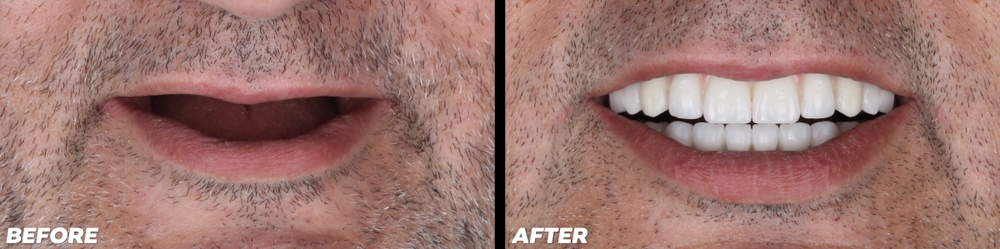
Your results from All-on-X full arch surgery in Calvert County, Maryland are truly going to be transformational. After your procedures and healing, you’ll enjoy benefits such as:
- A complete set of beautiful, natural-looking and functioning teeth
- The ability to chew comfortably again, allowing you to enjoy any foods
- Clearer speech
- Your facial structure being preserved by the implants
- Teeth that don’t shift, slip, or require special cleaning or nightly removal, unlike dentures
- Renewed confidence, especially in social and professional situations
- Long-lasting results
Implants are considered permanent, but they may eventually need to be replaced.
Insurance Coverage Varies, and Financing Makes It Fit Into Most Budgets
Dental insurance often covers a portion of certain components of All-on-X, such as extractions and temporary restorations.
However, full coverage of the procedure for the implants themselves is not likely.
Your dental care team will be sure you understand your coverage and help you explore financing options like CareCredit that turn your total investment into low monthly payments.
The Downsides of All-on-X Are Pretty Minimal
Let’s get the real downsides out of the way first.
You’ll need to commit to a healing period after surgery, follow aftercare instructions carefully, and maintain consistent oral hygiene to protect your investment. That’s pretty much it.
Other downsides?
You won’t be able to stop smiling, taking pictures, or telling everyone how amazing it feels to eat steak again!
Improve Your Smile, Speech, and Confidence With Full-Arch Dental Implants From Southern Maryland’s Top Prosthodontic Team
Your smile transformation is just a phone call away to our team!
Father-and-son team Drs. Joseph T. Luke and Jonathan T. Luke both have the experience and precision that exceptional full arch results require.
Call our team at 301-880-4439 today to speak with a member of our staff or request your evaluation online and find out for yourself the benefits of All-on-X full arch restoration.